Biophilic Design: Increasing Tenant Retention Through Natural Integration
CategoriesSustainable Innovation

Biophilic Design: Increasing Tenant Retention Through Natural Integration

Biophilic Design: Increasing Tenant Retention Through Natural Integration

By Lara Okunubi, CEO, Ideal Residence

In 2026, the Los Angeles multi-family housing market has evolved beyond simple location-based metrics. As institutional investors and developers navigate the complexities of Measure ULA and fluctuating interest rates, maximizing asset value requires a strategic focus on human-centric design. Tenant retention is no longer just about lease management; it is fundamentally about creating environments where people want to stay. At Ideal Residence, we believe the key to this stability lies in the seamless integration of biophilic design principles.

Biophilic design is more than an aesthetic trend; it’s a data-driven investment strategy. Research consistently shows that spaces that incorporate natural elements—light, vegetation, natural materials—have a profound impact on resident well-being, reducing stress and increasing overall satisfaction. From an institutional standpoint, this translates directly to increased Net Operating Income (NOI). By reducing tenant turnover, a significant driver of operating expenses (OpEx), we significantly de-risk our assets.

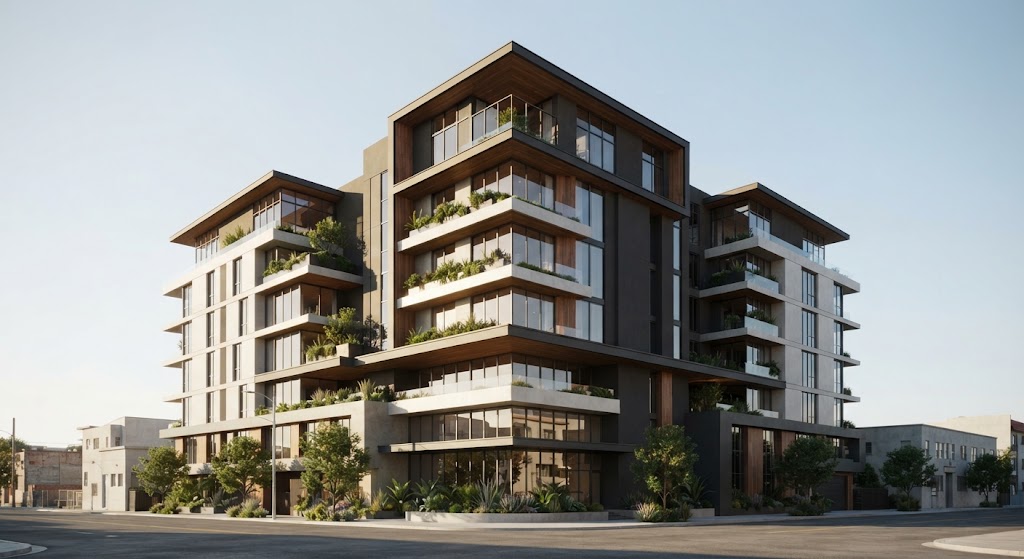
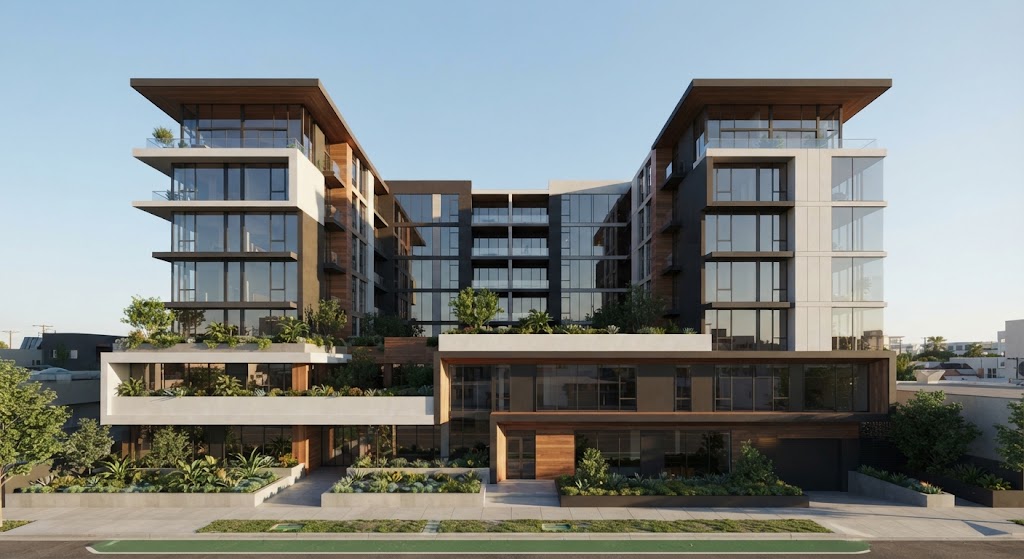
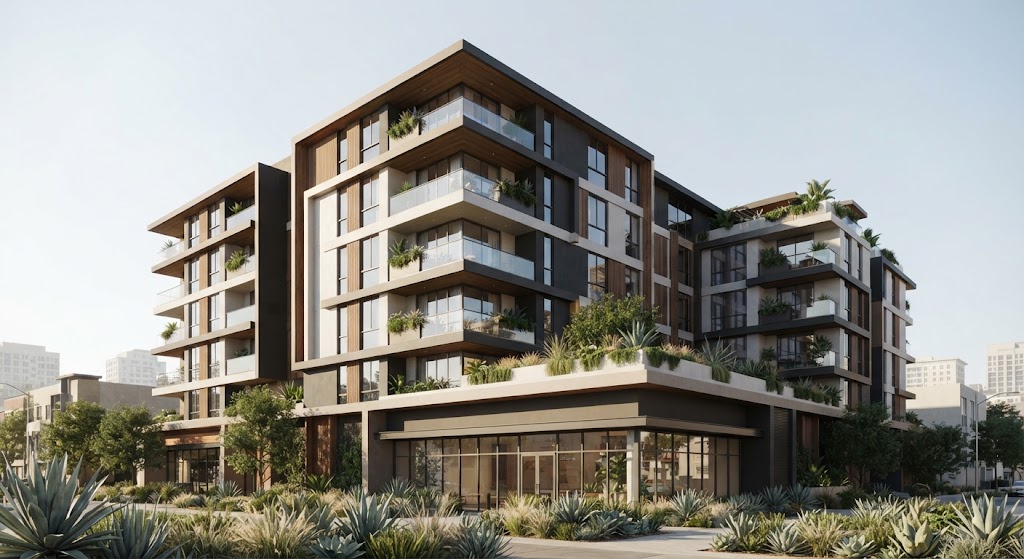
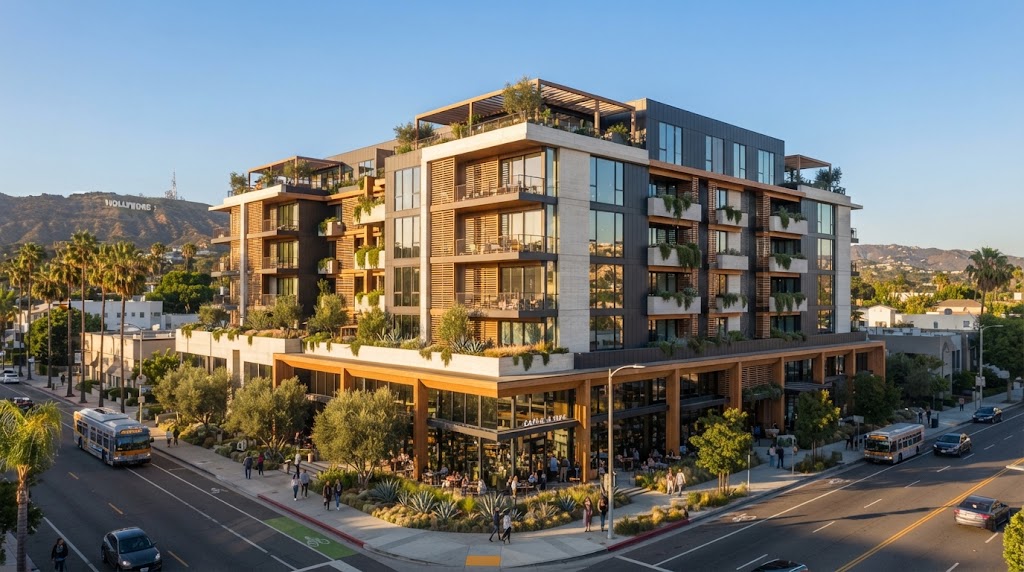
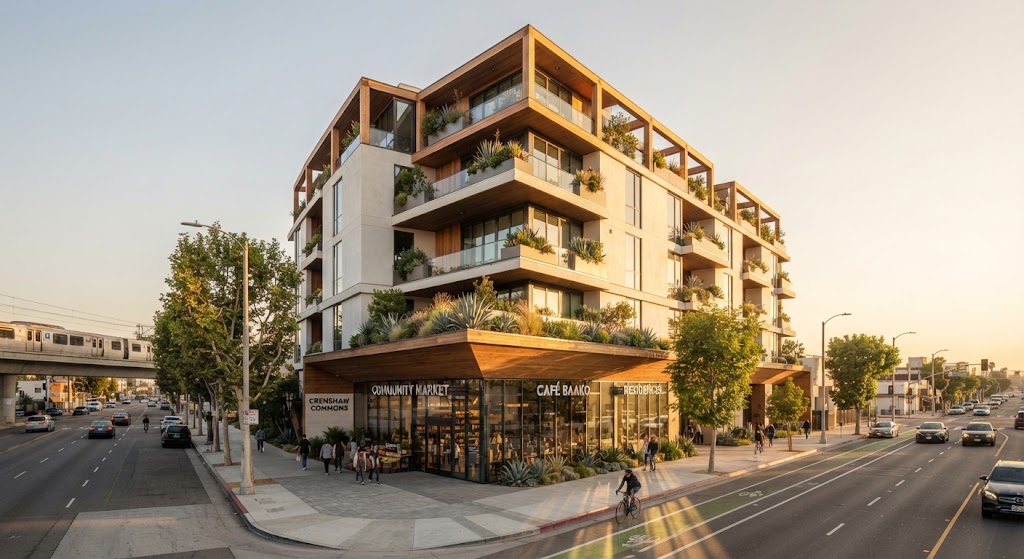
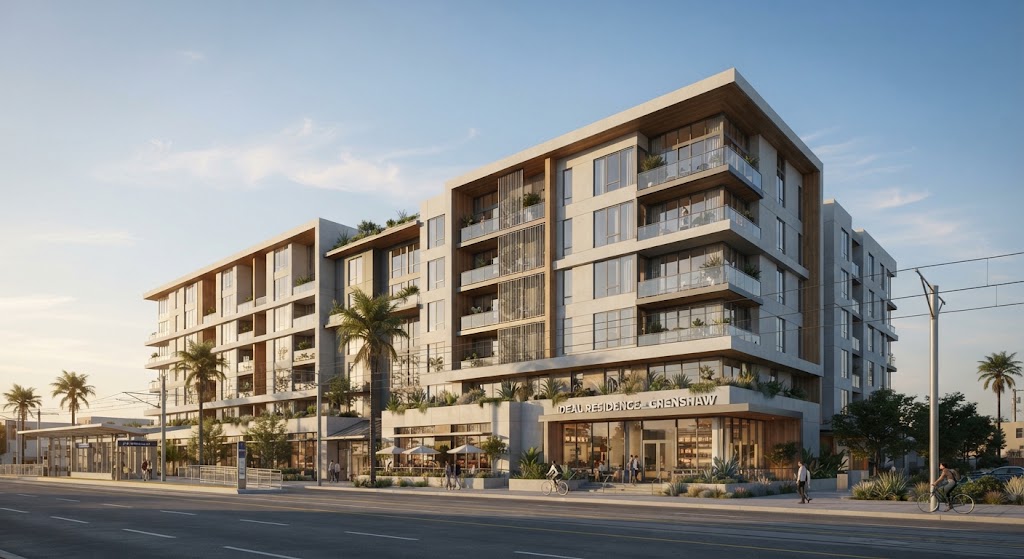
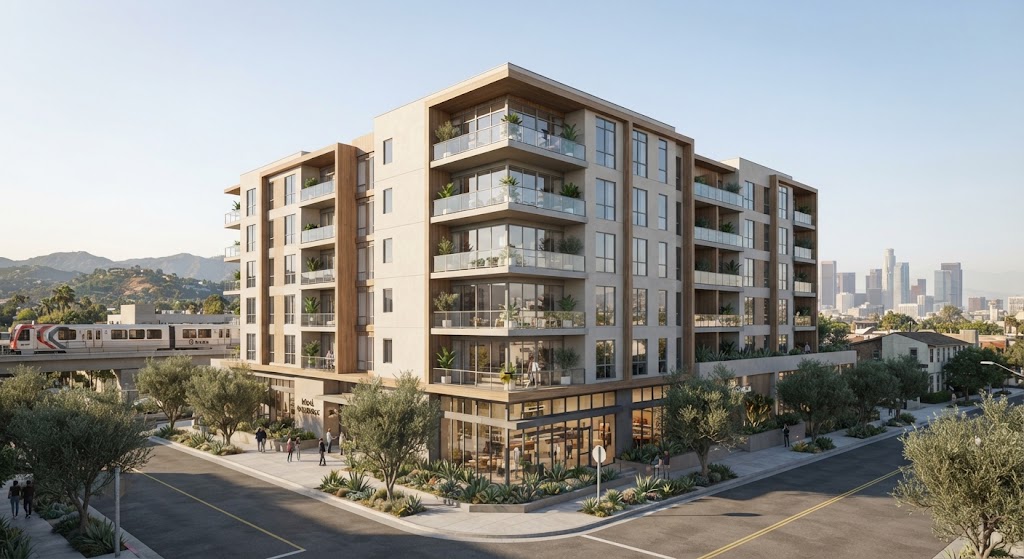
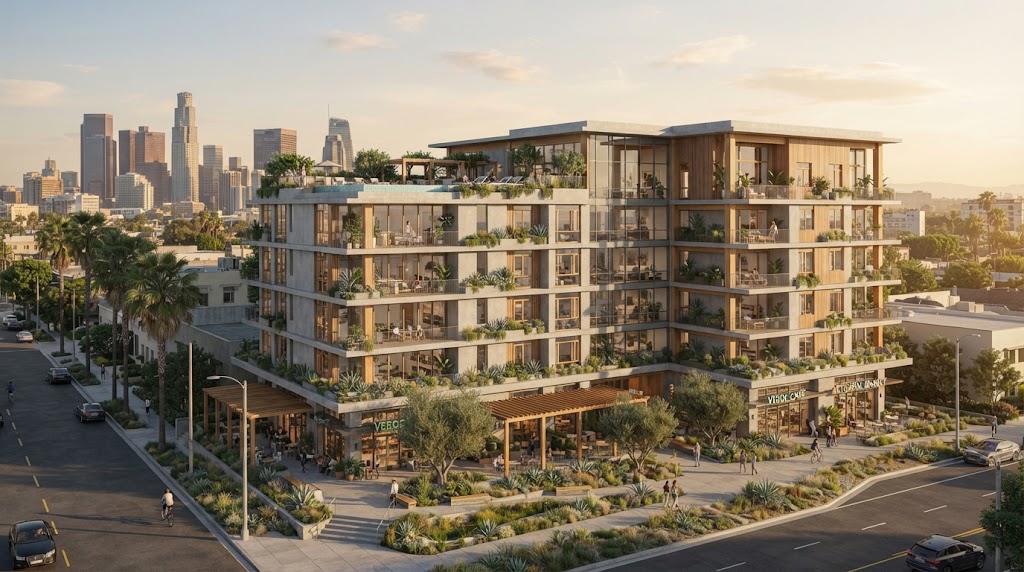
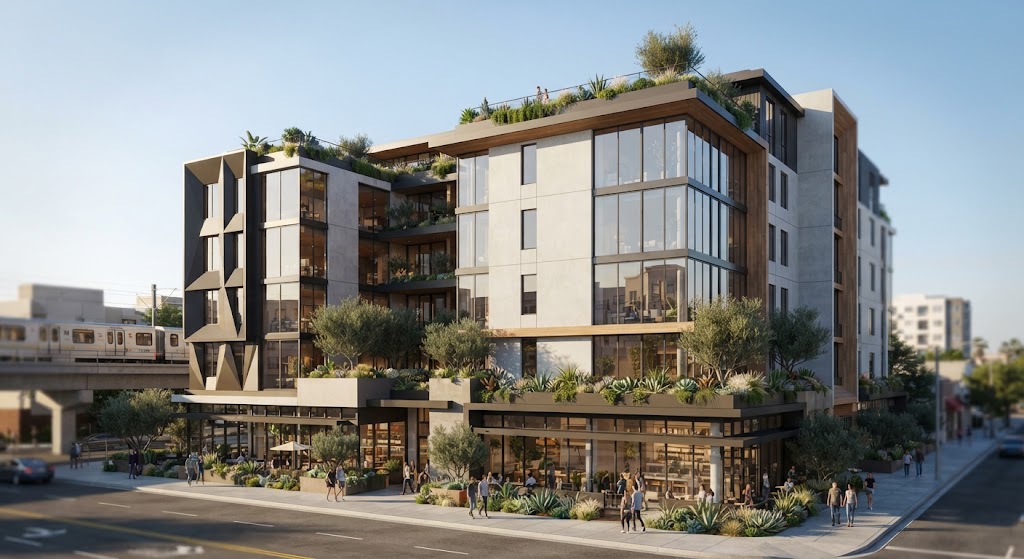
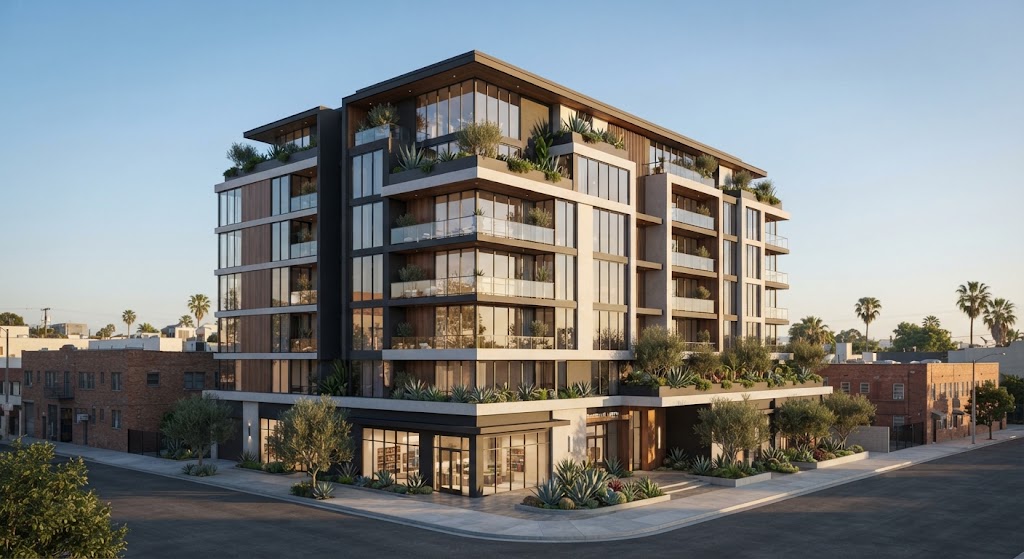
Our upcoming project in the Crenshaw Corridor serves as a perfect live case study. This 7-story, 80-unit development, designed under the city’s Transit-Oriented Communities (TOC) Incentive Program, features a central courtyard with native, drought-tolerant California landscaping, mass timber accents, and strategic lighting that mimics the natural day cycle. These are not luxury ‘add-ons’ but integral components intended to foster a sense of tranquility and community—factors that directly correlate with longer lease terms and higher renewal rates.

The financial logic is compelling. While initial implementation can add marginal costs, the long-term ROI is clear. Enhanced well-being leads to higher resident satisfaction, which reduces marketing costs, leasing commissions, and apartment turnover expenses. Furthermore, buildings with strong wellness credentials often achieve premium rents and are viewed more favorably in terms of asset valuation by lenders and appraisers, especially as CalGreen building standards become more rigorous. We are not just building apartments; we are creating eco-resilient, community-focused homes that deliver stable, long-term returns.

As we look towards the future of Los Angeles development, particularly around crucial infrastructure projects like the K Line, the demand for sustainable, healthy living environments will only accelerate. Integrating nature into our dense urban core is essential for creating lasting value. At Ideal Residence, we remain committed to pioneering these innovative solutions, delivering superior living experiences for our residents and robust performance for our joint-venture partners.

Leading with Integrity: Why Ethics Drive Long-Term Real Estate ROI
CategoriesDeveloper Insights

Leading with Integrity: Why Ethics Drive Long-Term Real Estate ROI

Leading with Integrity: Why Ethics Drive Long-Term Real Estate ROI

As Los Angeles navigates the regulatory complexities of 2026, the intersection of ethics and profitability is no longer a philosophical debate; it is an economic imperative. The era of speculative, extraction-based development is giving way to a new model defined by sustainable, community-aligned investments.

In a market defined by high interest rates, escalating construction costs, and localized regulatory pressures like Measure ULA, institutional investors must prioritize developers who understand that integrity is the ultimate de-risking mechanism. For Ideal Residence, ethics are the core driver of our asset valuation strategy.

The New Math of Ethical Development in Los Angeles

Ethical development is fundamentally about future-proofing. When we approach a new project, such as our signature 7-story, 80-unit mixed-use development in the Crenshaw Corridor, we view ethical considerations through the lens of performance metrics.

For years, many developers viewed the Los Angeles Transit-Oriented Communities (TOC) Incentive Program solely as a mechanism for Floor Area Ratio (FAR) bonuses and increased density. This transactional view misses the strategic advantage.

By genuinely integrating affordable housing at significant levels—far beyond the bare minimums—we cultivate deep institutional and municipal goodwill. This goodwill translates into streamlined permitting and reduced political risk. In L.A.’s complex entitlement landscape, these time savings dramatically lower soft costs and improve project IRRs.

Sustainability as a Stabilizing Force for OpEx

Our commitment to ethical development extends directly into our environmental strategy. Ideal Residence projects do not merely meet the state’s CalGreen Building Standards; we design for net-zero operational potential.

Our forthcoming Crenshaw development features robust smart-grid integration, advanced greywater recycling systems, and passive solar design principles. Why? Because eco-resilient design stabilizes long-term Operating Expenses (OpEx).

As energy and water costs in Southern California continue to rise, properties that consume less remain competitive. Lower utility overheads directly increase Net Operating Income (NOI). Furthermore, institutional Lenders (LPs) are increasingly filtering allocations through strict ESG mandates. Developing to these high ethical standards unlocks preferential financing terms, further enhancing the project’s cash-on-cash return.

The “Integrity Premium”: Community Buy-In and Market Resilience

Long-term asset stability requires more than just efficient construction; it requires community buy-in. In areas like South L.A., historical displacement concerns are high.

A developer lacking integrity creates local friction, leading to costly delays or litigation.

Conversely, by prioritizing local hire agreements, offering truly accessible community benefits, and designing projects that enhance the existing urban fabric, we build social capital. This “Integrity Premium” leads to faster lease-ups, lower tenant turnover, and a more resilient asset that performs throughout market cycles.

Conclusion

The future of the Los Angeles skyline is being built today by those who understand that ethical development is not an oxymoron, but an economic opportunity. Integrity isn’t an added cost; it is the foundation upon which long-term, high-yield institutional real estate ROI is built.

CategoriesNeighborhood Spotlights

Culver City Tech Hub: The Ripple Effect on Local Apartment Markets

Culver City Tech Hub: The Ripple Effect on Local Apartment Markets

Measuring the Radius of the Culver City Tech Surge

As we navigate the second quarter of 2026, the Los Angeles multifamily landscape continues to bifurcate between stagnant legacy assets and high-performance, transit-oriented new construction. While much attention is paid to the downtown core, the defining narrative of Western Los Angeles is the economic explosion of the Culver City tech hub and its inevitable, quantifiable ripple effect on the surrounding apartment markets.

The unprecedented concentration of Tier-1 content creation and technology giants—including Amazon Studios, Apple TV+, and Sony—within a tight three-mile radius has created an unsustainable supply-demand imbalance. This concentration of high-income human capital is driving unprecedented competition for housing that meets the expectations of today’s modern, globally mobile workforce.

For institutional investors and private equity partners looking to maximize Net Operating Income (NOI), the critical factor is identifying submarkets within a 20-minute, transit-enabled commute of this tech epicenter.

The 20-Minute Commute: Why the Crenshaw Corridor is Prime Real Estate

The “tech ripple” does not affect all neighboring submarkets equally. The premium on proximity is paramount, but the real opportunity lies in accessible proximity. The traditional “Westside” boundaries are oversaturated, and regulatory friction, including Measure ULA (the 4% transfer tax on properties over $5 million), has muted certain transaction volumes.

Conversely, areas seamlessly connected via the K Line infrastructure (the Crenshaw/LAX line) are experiencing an acceleration in asset valuation and rental velocity. The 20-minute transit commute has become the new standard, neutralizing the geographical barriers that previously defined South L.A. or the Crenshaw Corridor.

Ideal Residence identifies these transit nodes not just as development opportunities, but as catalysts for regional economic integration. By anchoring development to high-capacity transit, we actively de-risk asset performance and future-proof against the volatility of single-commute (automobile) dependencies.

Case Study: 7-Story, 80-Unit Hybrid Mass Timber Development

As a tangible example of this “ripple effect” strategy, Ideal Residence is in the pre-construction phase of a flagship project strategically located within the Crenshaw Corridor. This 7-story, 80-unit mixed-use development is optimized specifically for the tech demographic seeking both luxury and accessibility.

  • TOC Metric Optimization: We utilized the Transit-Oriented Communities (TOC) Incentive Program to achieve significant Floor Area Ratio (FAR) bonuses and density increases, dramatically lowering our cost-per-unit while maintaining optimal development scale.

  • Asset Valuation: The asset is designed to generate premium rents, targeting the “sandwich generation” of tech workers who commute to Culver City but prefer the cultural density and lifestyle amenities developing along the K Line.

The Institutional Advantage of Eco-Resilience and Smart Infrastructure

To effectively capture and retain this tech-adjacent workforce, the property itself must echo the innovation of the tenants’ employers. This means moving beyond standard amenities toward integrated eco-resilient design and smart-grid integration.

Ideal Residence develops with CalGreen Building Standards as the minimum threshold. By integrating advanced smart-grid infrastructure and sustainable mass timber construction, we achieve two critical institutional objectives:

  1. NOI Optimization: Significantly reducing long-term Operating Expenses (OpEx) through enhanced energy efficiency.

  2. Asset Class Leadership: Creating high-barrier-to-entry assets that are inherently more attractive to ESG-focused investment funds.

The tech ripple in Culver City is not a temporary trend; it is a permanent structural shift in where high-income Angelenos live and work. By leveraging the TOC Tier bonuses and integrating sustainable technology, we transform geographical proximity into institutional-grade asset performance.

Decarbonizing the Crenshaw Corridor: A Blueprint for Sustainable Urbanism
CategoriesSustainable Innovation

Decarbonizing the Crenshaw Corridor: A Blueprint for Sustainable Urbanism

Decarbonizing the Crenshaw Corridor: A Blueprint for Sustainable Urbanism

By Lara Okunubi, CEO, Ideal Residence

The Los Angeles multi-family real estate landscape is undergoing a profound structural shift. In 2026, the convergence of stringent regulatory mandates, escalating institutional ESG (Environmental, Social, and Governance) requirements, and shifting tenant demographics has made conventional, carbon-intensive development an obsolete model. For institutional investors, the path to long-term asset value and de-risking portfolios no longer merely skirts sustainability; it requires a radical commitment to deep decarbonization. Nowhere is this opportunity more defined than in South L.A.’s historic Crenshaw Corridor.

Ideal Residence is not just observing this transformation; we are engineering it. As we deploy capital into key Transit-Oriented Communities (TOC), our mandate is clear: deliver superior risk-adjusted returns by developing the next generation of eco-resilient, net-zero-ready housing infrastructure.

The Convergence of Transit and High-Performance Design

Decarbonization in an urban context is intrinsically linked to mobility. The completion of the K Line infrastructure has fundamentally redefined connectivity in the Crenshaw Corridor, creating a uniquely fertile ground for sustainable urbanism. This transit investment allows us to leverage high-leverage density bonuses while simultaneously slashing the carbon footprint associated with resident transportation.

However, true sustainable urbanism goes beyond proximity to rail. We view the building shell itself as a critical mechanism for carbon reduction and operational efficiency.

Engineering NOI through Energy Efficiency

For our upcoming 7-story, 80-unit mixed-use development on Crenshaw Blvd, we are moving beyond CalGreen Building Standards to implement a vertical integration of smart-grid technologies and high-performance building systems.

  • Mass Timber Hybrid Structures: To address embodied carbon—the emissions generated during construction—we are utilizing mass timber components. This not only sequesters carbon but accelerates construction timelines, reducing localized pollution and interest carry.

  • Passive Survivability and Systems: Our designs prioritize high-performance glazing, enhanced thermal insulation, and passive cooling strategies. This drastically reduces energy demand for HVAC, which traditionally dominates building OpEx (Operating Expenses).

  • Smart-Grid Integration: The project will feature an advanced energy management system coupled with on-site solar storage. This allows the asset to balance loads, draw grid power only during off-peak hours, and integrate seamlessly with a circular energy economy.

By ruthlessly optimizing energy consumption, we directly enhance Net Operating Income (NOI). Sustainable design is no longer a cost center; it is a critical driver of asset valuation in a market that increasingly penalizes inefficient structures.

Navigating the Regulatory Landscape: Measure ULA and TOC Incentives

In the current Los Angeles regulatory environment, successful execution requires sophistication. While Measure ULA (the “mansion tax”) has created headlines regarding its impact on transfer taxes, our strategy focuses on leveraging long-term, pro-density mechanisms.

The L.A. Transit-Oriented Communities (TOC) Incentive Program is central to our blueprint. By prioritizing high-percentage affordable housing ratios within our Crenshaw development, we maximize Floor Area Ratio (FAR) bonuses and density increases. This allows us to scale the project efficiently, optimizing the land cost per unit while meeting critical community housing needs.

This approach de-risks the entitlement process and ensures our projects align with municipal goals, creating a streamlined path to horizontal and vertical development.

A Future-Proof Investment in South L.A.

Decarbonizing the Crenshaw Corridor is not a hypothetical exercise; it is an imperative for the future of Los Angeles real estate. By blending institutional-grade financial analysis with cutting-edge sustainable architecture, Ideal Residence is creating a new asset class.

The skyline of Los Angeles is being redrawn, and the buildings that define it must be resilient, efficient, and equitable. For joint-venture partners and institutional lenders who recognize the shifting tides of regulation and tenant demand, this blueprint offers the definitive path forward.

Sustainable urbanism is the future of core investment in Southern California. We invite you to build it with us.

Public-Private Partnerships: Unlocking Value in Urban Redevelopment
CategoriesDeveloper Insights

Public-Private Partnerships: Unlocking Value in Urban Redevelopment

Public-Private Partnerships: Unlocking Value in Urban Redevelopment

As we navigate the complex macroeconomic landscape of 2026, the Los Angeles real estate market stands at a critical inflection point. Traditional development models are facing unprecedented headwinds, from the persistent high-cost environment to the regulatory pressures of Measure ULA. In this challenging climate, institutional investors and municipal leaders must look beyond conventional structures to drive meaningful growth. The most viable path forward for institutional-grade, sustainable development lies in sophisticated Public-Private Partnerships (P3s).

For Ideal Residence, P3s are not merely a financing mechanism; they are the strategic cornerstone for unlocking intrinsic value in underutilized urban corridors. By aligning private capital with public objectives, we can de-risk complex projects and deliver superior risk-adjusted returns while addressing the city’s acute housing needs.

The Strategic Imperative for P3s in Los Angeles

The argument for Public-Private Partnerships in Southern California is rooted in economic necessity. The cost of vertical construction and land acquisition in prime LA submarkets requires innovative capital stacks to maintain project viability and optimize Net Operating Income (NOI).

Municipalities hold powerful levers—such as land, zoning density bonuses, and accelerated permitting—that can significantly alter the valuation model of a development asset. When the public sector proactively deploys these assets, it creates an environment where private developers like Ideal Residence can maximize Floor Area Ratio (FAR) and deploy capital more efficiently.

This symbiotic relationship is essential for realizing the full potential of high-impact transit corridors, where market-rate and affordable housing integration is paramount for long-term community resilience and asset performance.

De-Risking and Value Creation

The primary investment thesis for P3s is structured de-risking. In complex urban redevelopments, entitlement and pre-development risks are often the steepest hurdles for institutional capital. A proactive P3 framework allows for these risks to be mitigated through streamlined regulatory pathways and public sector buy-in.

Furthermore, P3 models enhance asset valuation by integrating vital infrastructure improvements. By collaborating on the surrounding public realm, we create holistic environments that command higher residential premiums.

Our approach at Ideal Residence focuses on the long-term operational efficiency (OpEx) of these assets. We prioritize eco-resilient design, smart-grid integration, and full CalGreen Building Standards compliance. This forward-thinking strategy ensures that our P3 projects remain competitive, liquid, and sustainable for decades to come, reducing long-term lifecycle costs and protecting investor capital against future regulatory shifts.

A Case Study in the Crenshaw Corridor

The potential of P3s is perfectly exemplified by Ideal Residence’s flagship initiative: the upcoming 7-story, 80-unit mixed-use development in the Crenshaw Corridor. This project is strategically positioned to capitalize on the transformative K Line infrastructure in South L.A.

By utilizing the City of Los Angeles’ Transit-Oriented Communities (TOC) Incentive Program, this development maximizes density and FAR far beyond baseline zoning. This allows us to deliver a mix of high-quality housing while adhering to the program’s affordability covenants—a true public-private win.

This asset is designed with the modern Angeleno in mind, integrating smart-city technology and robust sustainability features. The project serves as a live demonstration of how P3 frameworks can catalyze investment in historically underserved submarkets, creating vital transit-oriented hubs while delivering institutional-grade returns.

A Vision for 2026 and Beyond

The future of the Los Angeles skyline and the vitality of its transit corridors depend on our ability to successfully scale the P3 model. We must transition from an ad-hoc project mentality to a programmatic approach to urban redevelopment.

For municipal leaders, P3s offer a mechanism to achieve housing goals without straining public coffers. For institutional partners, they offer a pathway to access high-barrier-to-entry markets with mitigated risk and enhanced returns.

Ideal Residence is uniquely positioned at the intersection of this dynamic,

The Inglewood Alpha: Translating Stadium Noise into Sustained Multi-family Performance
CategoriesNeighborhood Spotlights

Inglewood’s Renaissance: Leveraging Sports and Entertainment for Housing Demand

Inglewood’s Renaissance: Leveraging Sports and Entertainment for Housing Demand

The geopolitical and economic landscape of Los Angeles real estate is undergoing a fundamental paradigm shift. In 2026, the intersection of infrastructure investment and the experience economy is redefining where capital seeks returns in the multi-family sector. Nowhere is this more evident than in Inglewood. This municipality is transforming rapidly, and the catalyst is undeniable: the monumental scale of its sports and entertainment district.

This isn’t just a localized boom; it’s a structural realignment. It’s the moment when large-scale commercial success creates an intense, immediate need for institutional-grade housing solutions. Under the leadership of CEO Lara Okunubi, Ideal Residence has identified Inglewood as a primary example of where transit-oriented, sustainable development must scale to meet this surging demand.

The Entertainment Multiplier Effect

The SoFi Stadium, the Intuit Dome, and the surrounding venues have done more than create event-day traffic. They have seeded an entire ecosystem of ancillary businesses, creating a permanent workforce and attracting a demographic of affluent professionals seeking proximity to dynamic amenities. This activity acts as a potent multiplier effect on local economic output.

When billions of dollars are invested in iconic venues, a powerful magnetic draw occurs. The demand for housing near this nexus is no longer theoretical—it is an urgent operational requirement. This immediate need, when met with a chronic undersupply of modern housing, presents an exceptional investment profile.

De-risking via Infrastructure & Policy

Crucially, Inglewood’s renaissance is not occurring in a vacuum of speculative development. It is structurally reinforced by critical infrastructure. The K Line (Crenshaw/LAX Transit Project) provides a reliable connective tissue, linking the South L.A. and Inglewood corridors directly into the greater Los Angeles metropolitan network. This connectivity significantly de-risks multi-family investment by securing long-term tenant velocity.

Ideal Residence is proactively utilizing regulatory mechanisms designed to optimize this environment. The Transit-Oriented Communities (TOC) Incentive Program remains essential for achieving high-performance asset valuation. By leveraging significant Floor Area Ratio (FAR) bonuses in exchange for deep affordability components, we synthesize maximum yields with meaningful community benefit.

The Sustainable, High-Performance Mandate

However, the 2026 market demands more than prime location. Institutional partners and sophisticated tenants alike require assets with robust environmental, social, and governance (ESG) credentials. The Inglewood submarket, while booming, has many aging structures unable to provide the eco-resiliency necessary for long-term hold strategies.

Our signature approach—echoing our 80-unit project in the nearby Crenshaw Corridor—is the antidote to obsolete inventory. Ideal Residence is committed to delivering assets incorporating:

  • Eco-Resilient Design: Utilizing advanced envelope technologies and sustainable materials to reduce operating expenses (OpEx) while achieving CalGreen Building Standards certification.

  • Smart-Grid Integration: Forward-thinking energy systems that future-proof the asset and provide tenants with modern energy efficiency.

  • Net Operating Income (NOI) Optimization: Building green isn’t just an ethic; it is an economic imperative that lowers long-term operational costs and ultimately drives superior asset valuation.

Forward-Looking: Partnering for Impact

The narrative of Inglewood is a long-term economic realignment. It’s about recognizing the structural shift of Los Angeles and deploying capital effectively. This renaissance is only in its nascent phase. The upcoming 2026 World Cup match and the 2028 Olympic Games will only accelerate the demand for both short-term hospitality and, more critically, long-term residential solutions.

Ideal Residence invites institutional investors and joint-venture partners to engage in this transformation. The Inglewood housing market presents a unique window: the ability to invest in a market with high-velocity demand drivers (sports/entertainment/transit) while delivering essential, sustainable, and high-performance assets. We are building the infrastructure of opportunity, creating value that transcends the event cycle.

EV Charging Infrastructure: A Mandatory Amenity for 2026 Luxury Renters
CategoriesSustainable Innovation

EV Charging Infrastructure: A Mandatory Amenity for 2026 Luxury Renters

EV Charging Infrastructure: A Mandatory Amenity for 2026 Luxury Renters

As we navigate the second half of the decade, the Los Angeles multifamily landscape is undergoing a profound paradigm shift. Proximity to transit and high-end finishes remain critical, but a new determinant of asset class equity has emerged. In 2026, robust, integrated EV charging infrastructure is no longer a forward-thinking prerequisite for “green” buildings; it is a mandatory requirement for the luxury renter demographic.

At Ideal Residence, we have long anticipated this inflection point. Led by CEO Lara Okunubi, our development thesis has always prioritized future-proofing assets against shifting regulatory and consumer demand. The market data is now undeniable: high-net-worth tenants in Southern California, particularly those seeking the convenience of Transit-Oriented Communities (TOC), overwhelmingly operate electric vehicles. Failure to provide Level 2 or Level 3 charging capability at a 1:1 ratio—or very near to it—immediately removes an asset from consideration for this Tier 1 renter pool.

The Economics of Electrification: Risk Mitigation and NOI

From an institutional investment perspective, the integration of extensive EV charging capacity must be analyzed through the lens of de-risking and Net Operating Income (NOI). While the initial Capital Expenditures (CapEx) for sophisticated smart-grid systems can be substantial, the long-term impact on asset valuation is overwhelmingly positive.

Buildings that lag behind in this infrastructure risk rapid obsolescence. Conversely, early adopters can leverage these systems to reduce Operating Expenses (OpEx) through smart-grid integration and, increasingly, monetize the charging service itself. The ability to offer guaranteed, seamless charging to a tenant paying premium rent significantly increases retention rates, thereby stabilizing cash flow. For context, industry projections suggest that by 2028, a lack of comprehensive onsite charging will result in a measurable “brown discount” in property valuation.

Navigating the Los Angeles Regulatory and Infrastructure Landscape

Developers in Los Angeles face a unique dichotomy. The regulatory environment is aggressive, with strict CalGreen Building Standards and municipal pushes toward electrification. The City of Los Angeles, recognizing this, has integrated various incentives within the Transit-Oriented Communities (TOC) program to encourage this infrastructure, often tying it to Floor Area Ratio (FAR) bonuses and other development incentives.

However, the strain on the existing grid is a valid concern. This is where truly innovative, eco-resilient design becomes crucial. It is not enough to simply install chargers; one must design integrated energy management systems that utilize battery storage and, where feasible, onsite solar generation to offset peak demand charges and balance the load. At Ideal Residence, our approach moves beyond simple compliance; we integrate these systems into the core architectural logic of the development.

Case Study: The Crenshaw Corridor Advancement

Our signature upcoming project—a 7-story, 80-unit mixed-use development in the South L.A. Crenshaw Corridor—serves as a blueprint for this sustainable, pro-forma driven approach. Situated directly adjacent to key K Line infrastructure, this project leverages the highest TOC tiers while prioritizing a 100% EV-capable parking program.

We are not merely installing outlets. We are deploying a sophisticated load-management system capable of dynamic energy allocation. This allows us to maximize the number of active chargers while minimizing the required utility service upgrade, directly optimizing our development budget. This project doesn’t just promise a sustainable lifestyle; it guarantees the infrastructure necessary to support it, de-risking the asset for our partners and ensuring its relevance well into the 2030s.

The Outlook for LA’s Skyline

The future of the Los Angeles skyline belongs to developments that successfully merge sustainability with luxury. EV charging infrastructure is the new baseline. As developers, our responsibility—and our opportunity—lies in anticipating these shifts before they become mandates. For institutional partners, aligning with developers who inherently understand this convergence of eco-resilience, regulatory compliance, and market demand is paramount to achieving superior risk-adjusted returns in this new real estate cycle.

The Importance of Transparency in Modern Real Estate Partnerships
CategoriesDeveloper Insights

The Importance of Transparency in Modern Real Estate Partnerships

The Importance of Transparency in Modern Real Estate Partnerships

In the dynamic 2026 Los Angeles multi-family market, transparency has evolved from a superficial buzzword into an essential institutional mandate. For developers, investors, and municipal partners, this proactive visibility—defined as clear, consistent communication and access to project metrics—is the cornerstone of resilient asset management. At Ideal Residence, our commitment to this ethos isn’t merely philosophical; it’s a strategic imperative that directly influences Net Operating Income (NOI) and accelerates complex project timelines.

Effective transparency is particularly crucial in regions facing intricate regulatory frameworks and competitive land-use landscapes. In Southern California, and specifically Los Angeles, the combination of Measure ULA implications and the rising costs of CalGreen Building Standards requires precise synchronization between capital partners and development teams. Our upcoming 7-story, 80-unit mixed-use development within the Crenshaw Corridor serves as a primary example of where optimized transparency accelerates successful outcomes.

Driving Project Velocity Through Regulatory Openness

A key challenge for any high-density project in LA is maximizing efficiency within the city’s Transit-Oriented Communities (TOC) Incentive Program. By maintaining radical transparency regarding floor area ratio (FAR) bonuses, height allowances, and set-back requirements with both our equity partners and municipal planning departments, we streamline the entitlement process. This proactive sharing of architectural feasibility studies and traffic analysis reports eliminates informational asymmetry, building the trust necessary for expedited approvals.

Enhancing Investor Confidence and NOI

Institutional partners, from private equity to commercial lenders, require granular visibility into project financials. Our approach includes real-time access to key performance indicators, construction cost variance, and refined Operating Expenses (OpEx) forecasting. By utilizing sophisticated asset management technology, partners can track the positive impact of sustainable innovations, such as smart-grid integration and eco-resilient water systems, on future asset valuation. This open-book philosophy creates the alignment needed to navigate shifting macroeconomic conditions, ultimately de-risking the investment.

In conclusion, the future of the Los Angeles skyline rests not on isolated effort, but on unified, open collaboration. Ideal Residence’s model of sustainable, transit-oriented development depends entirely on cultivating these trust-based relationships, where transparency acts as the fundamental catalyst.

Santa Monica Real Estate: Balancing Coastal Regulations with Modern Growth
CategoriesNeighborhood Spotlights

Santa Monica Real Estate: Balancing Coastal Regulations with Modern Growth

Santa Monica Real Estate: Balancing Coastal Regulations with Modern Growth

The Los Angeles multi-family investment landscape in 2026 demands a sophisticated understanding of micro-market dynamics. Nowhere is this more evident than in Santa Monica.

For institutional investors, Santa Monica represents a blue-chip asset class characterized by high barriers to entry and sustained tenant demand. However, the regulatory environment—a complex interplay of local zoning and the California Coastal Commission—requires a specialized development approach.

At Ideal Residence, led by CEO Lara Okunubi, we view these regulations not as obstacles, but as essential parameters for creating long-term, eco-resilient value. Our strategy centers on balancing necessary modern growth with the unique coastal fabric that defines the region’s appeal.

Navigating the Coastal Zoning Matrix

Developing in Santa Monica requires more than standard Floor Area Ratio (FAR) calculations. The city’s rigorous discretionary review process significantly impacts development timelines and required capitalization.

Success hinges on early and transparent engagement with municipal officials and community stakeholders. Successful projects are those that align private investment goals with the city’s long-term vision for sustainability and housing equity.

We prioritize a de-risking strategy that integrates regulatory compliance directly into the initial architectural concept, ensuring a streamlined path to entitlement.

The Sustainable, Transit-Oriented Imperative

The future of Santa Monica real estate is inherently linked to sustainability and transit accessibility. The city’s strict green building standards necessitate a forward-thinking approach to design.

Ideal Residence focuses on transit-oriented development (TOD). We leverage existing infrastructure and upcoming K Line connections to reduce car dependency and justify higher-density projects.

Our developments incorporate eco-resilient features from the ground up:

  • Smart-grid integration for optimized energy consumption.

  • Mass timber construction accents to reduce embedded carbon.

  • Native, drought-tolerant landscaping to manage water resources effectively.

This commitment to sustainable design does more than fulfill mandates; it fundamentally drives asset valuation by reducing long-term Operating Expenses (OpEx) and appealing to the modern, eco-conscious tenant base.

A Strategic Approach to Asset Valuation

In a market like Santa Monica, asset valuation is intrinsically tied to compliance and forward-thinking design. Ignoring the regulatory or environmental shift is no longer an option for institutional capital.

By anticipating these shifts, developers can secure Floor Area Ratio (FAR) bonuses and other incentives that significantly enhance project feasibility. This proactive approach directly impacts Net Operating Income (NOI) through both premium rents and operational efficiencies.

For private equity partners and commercial lenders, this strategy provides a robust framework for capital deployment in a high-demand coastal market.

Conclusion: Engineering the Coastal Skyline

The Santa Monica real estate market offers unparalleled opportunities, provided developers possess the expertise to navigate its complexities. The challenge is clear: create meaningful, dense housing solutions that respect the coastal environment.

At Ideal Residence, we are engineering the future of the Southern California skyline. By prioritizing sustainable, transit-oriented, and regulatorily sound development, we deliver assets that generate sustained value for our investors and the community alike. We invite forward-thinking joint-venture partners to join us in shaping this dynamic coastal market

The Rise of Mass Timber: Building Eco-Friendly High-Rises in Southern California
CategoriesSustainable Innovation

The Rise of Mass Timber: Building Eco-Friendly High-Rises in Southern California

The Rise of Mass Timber: Building Eco-Friendly High-Rises in Southern California

As the Los Angeles real estate landscape navigates the complexities of 2026—characterized by volatile dynamic interest rates and an intensifying climate mandate—the traditional paradigms of multi-family construction are being fundamentally rewritten. The imperative for institutional investors and developers is no longer just optimization of Floor Area Ratio (FAR); it is the integration of radical sustainability with optimized construction timelines to de-risk assets. At Ideal Residence, led by CEO Lara Okunubi, we recognize that the future of the L.A. skyline belongs to Mass Timber.

For decades, concrete and steel have been the unquestioned default for vertical development in Southern California. However, these materials carry a massive carbon footprint, accounting for a significant portion of global emissions. In an era defined by stringent CalGreen Building Standards and the local implications of Measure ULA, continuing with “business as usual” represents a significant regulatory and reputational risk for asset managers.

A New Standard: The Economic Case for Cross-Laminated Timber (CLT)

Mass timber, specifically Cross-Laminated Timber (CLT) and Glue-Laminated Timber (Glulam), offers a sophisticated, high-performance alternative to traditional methodologies. This is not the lightweight wood-frame construction of the past; these are engineered wood products that rival steel in structural capability while being significantly lighter.

From an investment perspective, the advantages of Mass Timber are realized rapidly through the construction lifecycle. Mass Timber components are prefabricated off-site with millimeter precision. This “kit-of-parts” approach transforms the construction site into an assembly zone, significantly compressing project schedules. For an institutional developer, a faster build-out translates directly into lower capitalized interest, reduced general conditions, and accelerated stabilization, ultimately boosting Net Operating Income (NOI) upon asset maturity.

The Ideal Residence Model: Mass Timber in the Crenshaw Corridor

At Ideal Residence, we don’t just analyze trends; we capitalize on them to deliver sustainable, transit-oriented communities. Our flagship 7-story development in the Crenshaw Corridor serves as a primary case study for Mass Timber’s viability in South L.A. By utilizing Mass Timber for the residential floors above a concrete podium, we are pioneering the type of eco-resilient design required in modern urban core markets.

Strategically located adjacent to the K Line infrastructure, this 80-unit mixed-use project leverages the City of Los Angeles Transit-Oriented Communities (TOC) Incentive Program. Mass Timber’s lighter structural weight is key to unlocking the density bonuses and reduced parking requirements offered by the TOC program. The aesthetic appeal of exposed timber ceilings in the units is also commanding a significant rental premium, directly contributing to superior asset valuation compared to adjacent concrete-and-drywall assets.

Navigating the 2026 Regulatory Landscape

The Southern California regulatory environment is increasingly hostile to carbon-intensive construction. Current municipal trends suggest that future density bonuses and FAR increases will be inextricably linked to a project’s lifecycle carbon impact. De-risking a real estate portfolio against 2030 and 2050 climate targets requires a decisive shift toward materials that sequester carbon.

Mass Timber inherently aligns with these performance-based codes. The renewable nature of the material, combined with its high insulation properties, drastically reduces operational OpEx through increased energy efficiency. Furthermore, when combined with smart-grid integration and other high-performance building systems, Mass Timber assets are uniquely positioned to achieve net-zero operational profiles, shielding investors from future carbon taxes and utility price volatility.

Conclusion: The Strategic Advantage

The transition to Mass Timber in Southern California is not merely an aesthetic or ethical choice; it is a critical strategy for future-proofing institutional real estate portfolios. As Lara Okunubi and the Ideal Residence team continue to demonstrate in the Crenshaw Corridor, the integration of Mass Timber with transit-oriented development metrics offers the most compelling path to sustainable growth, superior risk-adjusted returns, and the creation of resilient, high-demand assets in the Los Angeles market.

Ideal Residence develops high-quality, energy-efficient apartment buildings across Los Angeles, delivering smart, sustainable housing solutions for modern urban living.

GET IN TOUCH

County Assessor:
3962 West Martin Luther King Jr Blvd
Los Angeles CA 90008

Administrative Address:
3970 West Martin Luther king Jr.
Blvd, Los Angeles CA 90008

Newsletter

Get latest news & update

© 2025 Ideal Residence. All rights reserved.

© 2025 Ideal Residence. All rights reserved.

Designed by UpTech

about us

Ideal Residence develops high-quality, energy-efficient apartment buildings across Los Angeles, delivering smart, sustainable housing solutions for modern urban living.

get to know us

phone

310-701-7988

phone

310-701-7988

email

info@idealresidence.com

about us

Ideal Residence develops high-quality, energy-efficient apartment buildings across Los Angeles, delivering smart, sustainable housing solutions for modern urban living.

Get in touch

phone

310-701-7988

Ideal Residence, Los Angeles, California, USA

about us

Ideal Residence develops high-quality, energy-efficient apartment buildings across Los Angeles, delivering smart, sustainable housing solutions for modern urban living.

Newsletter

Get latest news & update