
Analyzing the “Measure ULA” Impact: What Investors Need to Know
Navigating the 2026 Southern California real estate landscape requires a sophisticated understanding of shifting regulatory frameworks and evolving tax structures. As Los Angeles continues to reshape its urban core, institutional investors and private equity partners must adapt to the financial realities introduced by the city’s transfer tax policies. At Ideal Residence, led by CEO Lara Okunubi, we view these municipal changes not merely as hurdles, but as catalysts for high-caliber, transit-oriented development.
The Financial Mechanics of Measure ULA
Passed to generate dedicated funding for affordable housing and community development, Measure ULA imposes a steep documentary transfer tax on high-value property transactions exceeding specific thresholds. For commercial lenders and institutional buyers, this structural shift directly impacts underwriting models, liquidation timelines, and projected Net Operating Income (NOI).
-
Higher Entry Thresholds: Transactions above the multi-million dollar tier face progressive tax rates that demand meticulous capital allocation.
-
OpEx Adjustments: Operating Expenses (OpEx) must now account for upfront transaction friction, altering short-term asset valuation metrics.
-
Underwriting Caution: Projections require deeper sensitivity testing to safeguard long-term cash flow against heavy taxation upon exit.
Mitigating Risk Through Strategic Asset Design
To successfully de-risk multi-family acquisitions in Los Angeles, developers must look beyond traditional development strategies. Maximizing asset value under current market conditions relies heavily on leveraging municipal incentives and integrating sustainable engineering. By combining Floor Area Ratio (FAR) bonuses with smart-grid infrastructure, properties can offset regulatory friction through superior operational efficiencies.
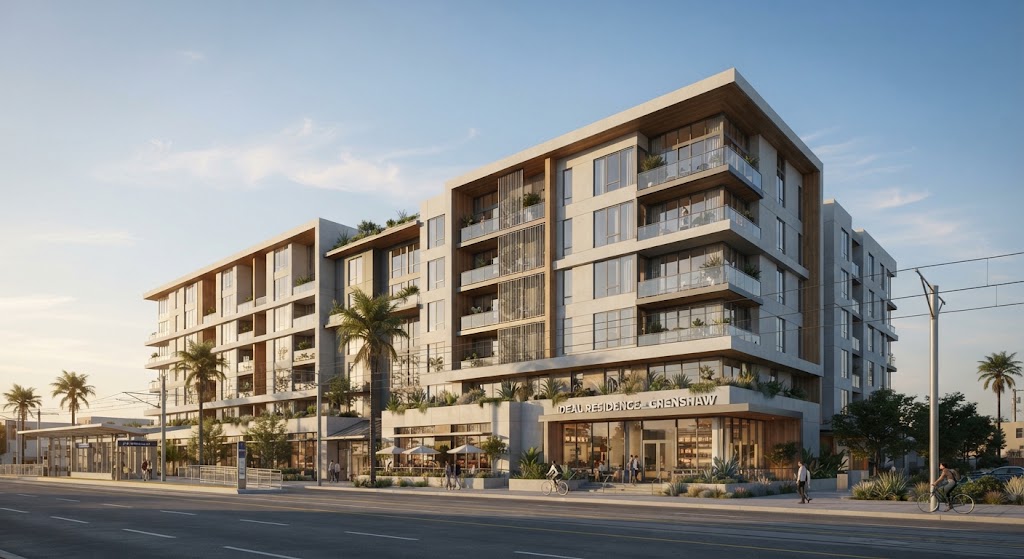
Our upcoming 7-story, 80-unit mixed-use development in the Crenshaw Corridor serves as a prime live case study. Situated directly along the K Line infrastructure, this project maximizes density bonuses while keeping construction footprints eco-resilient.
-
Transit-Oriented Communities (TOC): Utilizing TOC tier incentives minimizes parking minimums and expands buildable square footage.
-
Eco-Resilient Engineering: Adherence to strict CalGreen Building Standards reduces long-term utility consumption, protecting NOI.
-
Community-Centric Design: Integrating retail spaces with sustainable residential units drives mixed-use revenue streams.
The Horizon for Southern California Multi-Family Assets
The long-term health of the Los Angeles skyline depends on resilient, forward-thinking capital deployment. While tax policies like Measure ULA add immediate complexity, they simultaneously elevate the standard for high-performance real estate. Properties that prioritize transit proximity, sustainable design, and community integration will continue to command premium institutional interest.
As private equity partners and municipal leaders look toward the future, the mandate is clear: build smarter, greener, and closer to transit. Joint-venture opportunities in transit-rich submarkets remain a powerful vehicle for generating sustainable, risk-adjusted returns.
