Balancing Luxury and Affordability: The Ideal Residence Strategy
CategoriesDeveloper Insights

Balancing Luxury and Affordability: The Ideal Residence Strategy

Balancing Luxury and Affordability: The Ideal Residence Strategy.

By Lara Okunubi, CEO, Ideal Residence

The 2026 Los Angeles multi-family market is at an inflection point. The confluence of high interest rates, shifting demographic demands, and the implementation of Measure ULA has radically altered the landscape for institutional investment. Many developers view the demand for luxury amenities and the desperate need for affordable housing as mutually exclusive goals.

However, continuing the binary approach of building either high-end market-rate assets or deeply subsidized affordable housing is unsustainable. At Ideal Residence, we view this challenge not as a contradiction, but as a complex optimization problem. Our core thesis is that long-term asset valuation and civic responsibility can be synthesized through intelligent, transit-oriented development (TOD). We believe that de-risking a project in L.A.’s current regulatory environment requires a sophisticated integration of both luxury design principles and affordability mandates.

The Transit-Oriented Solution to the Pro Forma

The path to achieving this balance runs directly through the City of Los Angeles Transit-Oriented Communities (TOC) Incentive Program. We recognize that the key to maintaining a robust Net Operating Income (NOI) while delivering affordable units lies in leveraging development density bonuses. By targeting Tier 3 and Tier 4 development sites near major transit nodes, such as the K Line infrastructure, we can significantly increase our Floor Area Ratio (FAR).

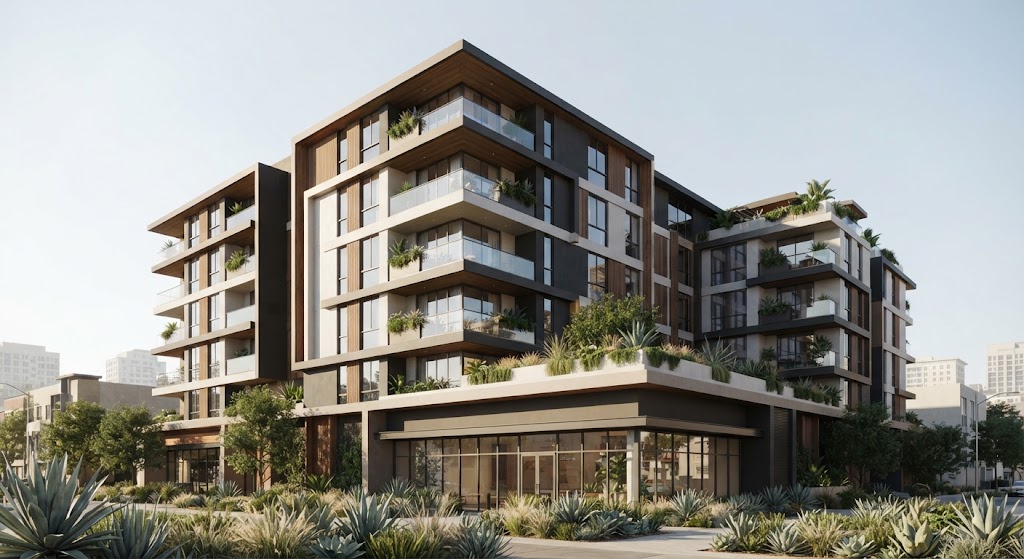
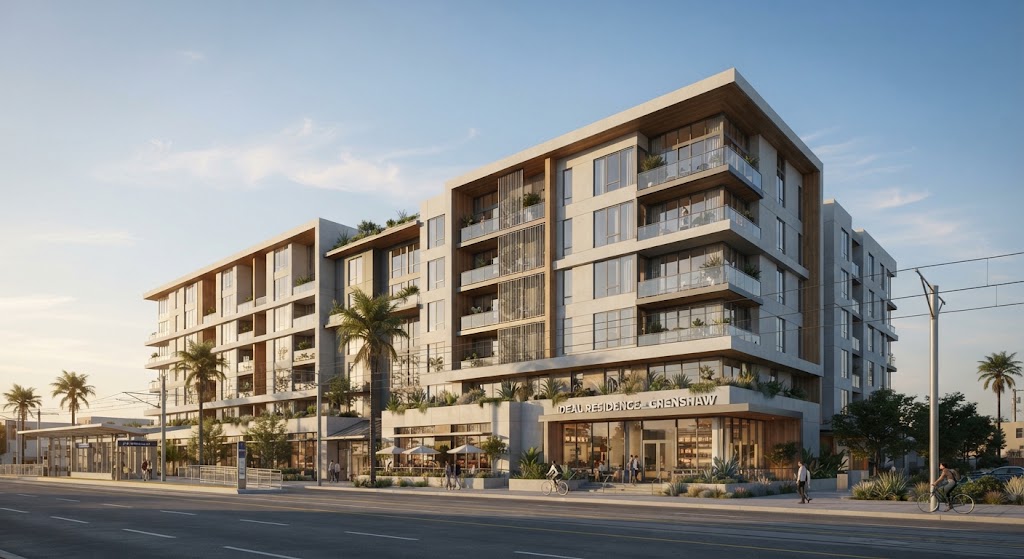
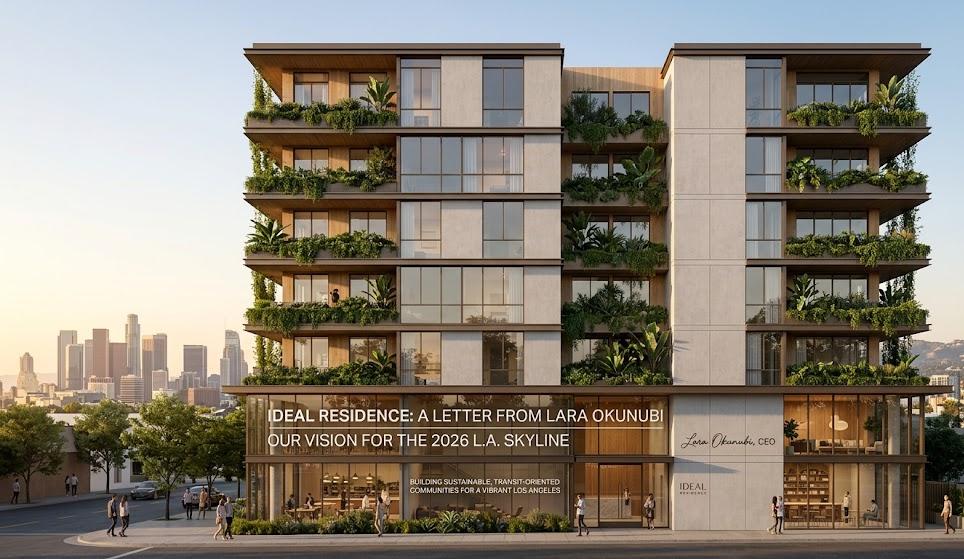
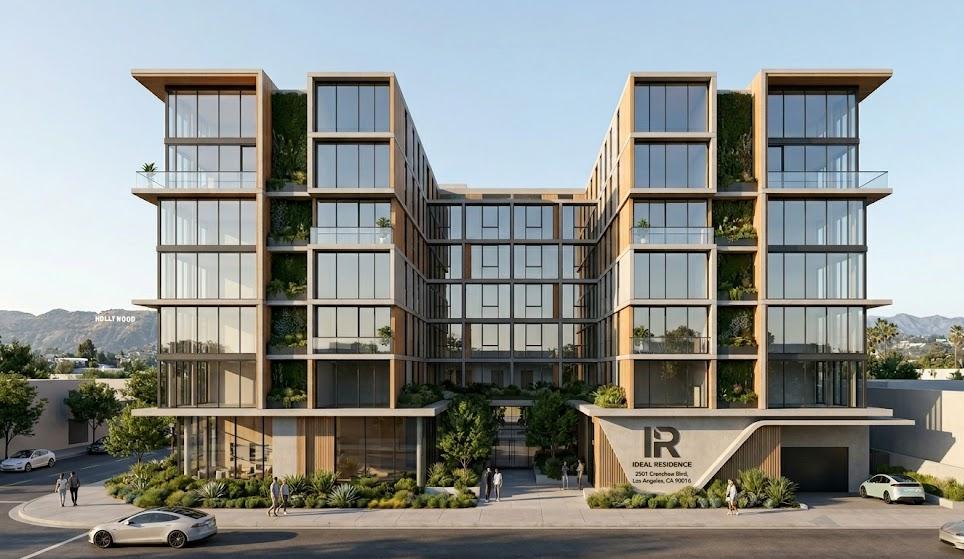
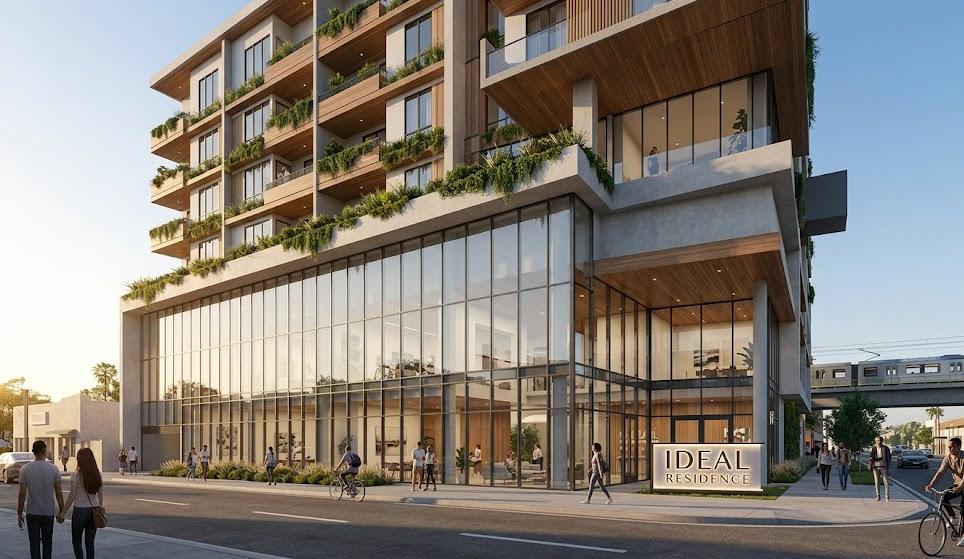
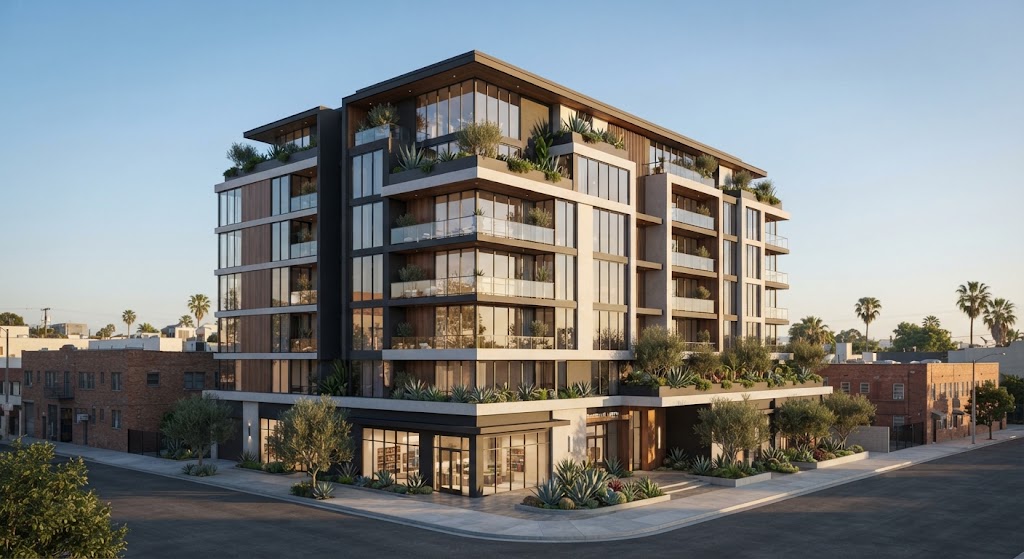
This strategic approach allows us to cross-subsidize the required affordable units by increasing the overall unit count without a corresponding linear increase in land acquisition costs. For our upcoming 7-story, 80-unit mixed-use development in the Crenshaw Corridor, this optimization is critical. We can integrate 10% deeply affordable units, satisfying municipal requirements and stabilizing the project politically, while the density bonus ensures the market-rate units provide the competitive returns required by institutional capital.

Redefining Luxury: Quality and Sustainability Over Opulence

The definition of luxury in 2026 has evolved beyond polished marble countertops and standard gym facilities. True luxury today, particularly for the environmentally conscious tenant, centers on sustainability, resilience, and connectivity.

Ideal Residence minimizes Operating Expenses (OpEx) while maximizing tenant comfort through forward-thinking, eco-resilient design. We are moving beyond minimum CalGreen Building Standards to implement:

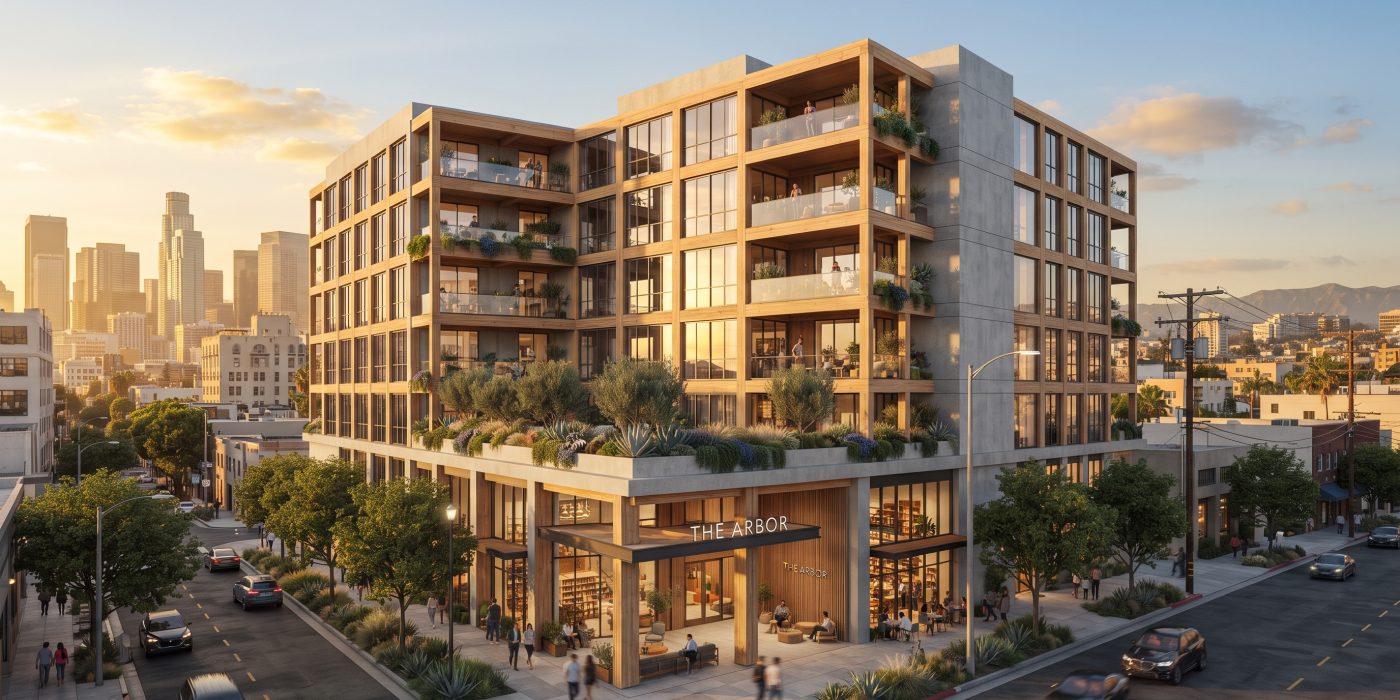
  • Mass Timber Construction: Utilizing advanced building materials that offer superior aesthetic appeal while reducing the carbon footprint and improving construction timelines.

  • Smart-Grid Integration & Passive Design: Utilizing advanced HVAC systems and building orientation to lower energy consumption, directly benefiting both NOI (for owner-paid utilities) and tenant retention (by reducing their cost of living).

  • Integrated Urban Greenery: Not merely cosmetic landscaping, but functional, drought-tolerant systems that manage stormwater runoff and reduce the urban heat island effect, enhancing long-term property durability.

By prioritizing this “sustainable luxury” model, we reduce long-term maintenance costs (OpEx) and create a high-quality living environment that commands premium market-rate rents, without the expense of superficial luxury fads.

Strategic Capital Allocation: A Dual-Return Philosophy

Our approach offers a compelling “triple bottom line” investment thesis: competitive financial returns (NOI), positive social impact, and enhanced environmental resilience. In an era of heightened scrutinized “impact investing,” this model successfully attracts ESG-focused institutional investors while maintaining the pro forma integrity that commercial lenders demand. We are creating assets that are not just compliant, but highly competitive and future-proofed against evolving regulatory frameworks.

The future of the Los Angeles skyline is being defined by our ability to integrate diverse communities. Ideal Residence is committed to leading this transformation, demonstrating that high-performance, aesthetically exceptional multi-family housing can and must coexist with affordability. We invite like-minded investment partners to join us in de-risking LA’s development landscape through the power of smarter, sustainable, transit-oriented innovation.

The CEO’s Take: Why 2026 is the Year for Mixed-Income Housing in L.A
CategoriesDeveloper Insights

The CEO’s Take: Why 2026 is the Year for Mixed-Income Housing in L.A

The CEO’s Take: Why 2026 is the Year for Mixed-Income Housing in L.A

By Lara Okunubi, CEO, Ideal Residence

Entering 2026, the Los Angeles multi-family housing sector stands at its most significant inflection point since the start of the decade. The traditional, single-track approach to development—the strict bifurcation of luxury-only or fully subsidized affordable projects—no longer meets the financial or regulatory demands of the market. As we evaluate current macroeconomic trends alongside hyper-local factors, my outlook is definitive: 2026 is the definitive year for mixed-income housing in Los Angeles. This model, blending market-rate and deed-restricted units, is the singular strategy capable of addressing L.A.’s profound housing shortage while providing the robust, risk-adjusted returns institutional capital requires.

The Convergence of Market and Macroeconomic Forces

The fundamental argument for mixed-income stems from a collision of economic necessity. In 2026, construction costs remain historically high, despite a stabilization in certain materials. Institutional lenders have largely retreated from high-leverage positions, scrutinizing project viability with intense rigor. When isolated, the numbers for traditional 100% affordable projects, which rely on layers of competitive tax credits, are often insufficient to generate necessary Net Operating Income (NOI). Conversely, the demand for pure luxury is softening as high interest rates constrain upper-end affordability. Mixed-income development breaks this impasse, creating a diversified revenue stream that de-risks the asset for institutional investors and private equity.

De-risking through Regulatory Incentives

In the context of L.A.‘s restrictive land use, regulatory compliance is where mixed-income truly proves its financial value. Our investment strategy leans heavily into the City’s Transit-Oriented Communities (TOC) Incentive Program. TOC is not merely a policy gesture; it is a financial accelerator. By committing to specific ratios of affordable units, Ideal Residence secures massive Floor Area Ratio (FAR) bonuses and parking reductions. This allows for significantly greater density than base zoning would permit, drastically lowering the per-unit cost basis. Leveraging these tier-level bonuses is the key to unlocking core urban areas like the Crenshaw Corridor and South L.A. that were previously economically unfeasible.

A Model of Provenance: The Crenshaw Corridor Development

We are moving past abstract arguments. The strongest proof-of-concept in our portfolio is the upcoming mixed-income development in the heart of South L.A.’s Crenshaw Corridor. This 7-story, 80-unit, mixed-use project was strategically placed to capture the revitalization powered by the new K Line infrastructure. By utilizing Tier 3 TOC bonuses, we increased our density by 70% and substantially reduced operating expenses (OpEx) related to structured parking. The residential mix (80% market rate, 20% dedicated to extremely low income) provides a reliable cash flow. We also prioritized long-term asset valuation by integrating robust eco-resilient design, including smart-grid capability and ultra-high-efficiency systems. This foresight de-risks the asset against future energy regulations while significantly lowering recurring utility costs.

Sustainable Design as Value Retention Strategy

The future of asset valuation in California is inextricably linked to sustainability. A property’s resilience to climate events and energy grid volatility is now a primary diligence metric for sophisticated limited partners. In 2026, building simply to current code—even the strict CalGreen Building Standards—is inadequate. Every Ideal Residence project integrates sustainable architecture (like mass timber accents, smooth concrete for thermal mass, and high-performance glazing) with integrated urban greenery and drought-tolerant native California landscaping. This commitment to ESG (Environmental, Social, and Governance) principles is not merely altruistic; it is a direct driver of long-term NOI and capital appreciation.

Moving Capital Off the Sidelines: The 2026 Imperative

My call to action is for partners ready to capitalize on this alignment of market conditions, policy, and demand. The Los Angeles skyline will be shaped by those developers who synthesize urban density, transit proximity, and a diverse tenant mix. By embracing the mixed-income model, fueled by strategic infrastructure like the K Line, we can create the sustainable, community-integrated housing L.A. needs while achieving superior risk-adjusted returns for our joint-venture partners. The inflection point is now.

Navigating Los Angeles Zoning Laws: A Developer’s Guide to Success
CategoriesDeveloper Insights

Navigating Los Angeles Zoning Laws: A Developer’s Guide to Success

Navigating Los Angeles Zoning Laws: A Developer’s Guide to Success
The 2026 Los Angeles Development Landscape: Complexity Meets Opportunity
As we move through 2026, the Los Angeles real estate market presents a complex paradox. Demand for high-quality housing remains acute, yet the regulatory environment is more intricate than ever. The passage of Measure ULA has fundamentally altered the pro forma calculations for major transactions, while evolving CalGreen Building Standards demand unprecedented levels of sustainability.

For institutional investors and development partners, success in this environment requires more than capital. It demands a strategic, surgical understanding of the municipal code. Navigating the intersection of political will, community necessity, and economic viability is the defining challenge for the modern developer.

At Ideal Residence, under the leadership of CEO Lara Okunubi, we view these challenges not as barriers, but as the framework within which truly impactful, sustainable, and profitable development occurs.

Decoding the Code: Density Bonuses and The TOC Incentive Program
The cornerstone of successful contemporary development in L.A. is maximizing the utilization of available incentives. The Transit-Oriented Communities (TOC) Incentive Program remains the single most effective tool for driving feasibility in the multi-family sector.

By strategically locating projects near major transit hubs, developers can unlock critical Tier 3 and Tier 4 incentives. These incentives provide significant Floor Area Ratio (FAR) bonuses and, crucially, substantial reductions in required parking ratios. This is not merely a cost-saving measure; it is a fundamental shift in land-use efficiency that directly enhances the long-term asset valuation.

Our upcoming signature project—a 7-story, 80-unit mixed-use development within the Crenshaw Corridor—is a prime example. By leveraging TOC Tier 4 incentives, we have optimized the site’s density, ensuring a mix of market-rate and affordable units that satisfies municipal requirements while maximizing potential Net Operating Income (NOI).

Strategic Geographic Anchoring: The K Line Infrastructure
Zoning success is inextricably linked to geography. The recent expansion of the K Line infrastructure has revitalized the South L.A. and Crenshaw areas, creating new high-opportunity zones for transit-oriented development.

Understanding the specific community plans and ‘Q’ conditions of these hyper-local areas is vital. De-risking a project in these corridors involves more than compliant architectural renderings; it requires active engagement with community stakeholders and a demonstrated commitment to the area’s long-term economic health.

Our expertise lies in this granular analysis, matching our eco-resilient design philosophy with the specific needs of the local zoning overlay. This proactive stance significantly mitigates entitlement risk.

The Future-Proof Pro Forma: Sustainability and Eco-Resilience
Sustainability is no longer an optional add-on; it is a regulatory requirement and a core driver of long-term OpEx reduction. The integration of smart-grid technologies and energy-efficient systems is essential for meeting both current CalGreen standards and future-proofing an asset against rising utility costs.

Ideal Residence’s commitment to “eco-resilient design” means integrating passive cooling, advanced water management, and renewable energy generation directly into the initial project scope. This strategic foresight reduces future retrofitting costs and appeals to an increasingly conscious tenant base, thereby stabilizing long-term occupancy and enhancing the asset’s terminal value.

Conclusion: Partnering for a Sustainable Skyline
The Los Angeles zoning landscape is formidable, but for those with the specialized knowledge and the right strategic vision, it offers unparalleled opportunities for sophisticated development. It is the crucible in which the future of the L.A. skyline is being formed.

At Ideal Residence, we invite forward-thinking joint-venture partners and institutional lenders to connect with us. Together, we can navigate this complexity to build the sustainable, connected, and profitable communities that Los Angeles demands.

1. From Vision to Vault: How Ideal Residence De-Risks Multi-Family Projects
CategoriesDeveloper Insights

From Vision to Vault: How Ideal Residence De-Risks Multi-Family Projects

The 2026 Los Angeles multi-family real estate ecosystem demands a fundamental shift in development execution. Navigating high interest rates, the structural realities of Measure ULA, and stringent municipal compliance requires more than traditional merchant builder tactics. Success today demands systematic risk mitigation embedded into every phase of a project’s lifecycle.

At Ideal Residence, we view de-risking not as a defensive measure, but as a proactive value-creation engine. By aligning institutional-grade investment underwriting with sustainable, transit-oriented site selection, we convert regulatory hurdles into predictable alpha.

Capitalizing on the TOC Framework and Regulatory Certainty

Entitlement risk is historically the primary destroyer of internal rates of return (IRR) in Southern California. Ideal Residence neutralizes this volatility by anchoring acquisitions within the City of Los Angeles Transit-Oriented Communities (TOC) Incentive Program.

+-------------------------------------------------------------------------+
|                    The Ideal Residence De-Risking Matrix                |
+------------------------------------+------------------------------------+
|       Traditional Development      |      Ideal Residence Strategy      |
+------------------------------------+------------------------------------+
| High Entitlement Risk (Spot Zoned) | Tier-Specific TOC Base Bonuses     |
| Extended Discretionary Approvals   | Streamlined Ministerial Pathways   |
| High Parking OpEx/CapEx            | Optimized Transit-Driven Ratios    |
| Standard Code Compliance Volatility| Predictable CalGreen Performance   |
+------------------------------------+------------------------------------+

By targeting Tier 3 and Tier 4 transit corridors, we unlock non-discretionary, ministerial approval pathways. This approach eliminates the unpredictable timelines of spot-zoning and conditional use permits.

Through the strategic application of Floor Area Ratio (FAR) bonuses and density matches, we maximize buildable square footage from day one. This programmatic approach to zoning ensures that land acquisition costs are strictly aligned with guaranteed density parameters.

Case Study: The Crenshaw Corridor Paradigm

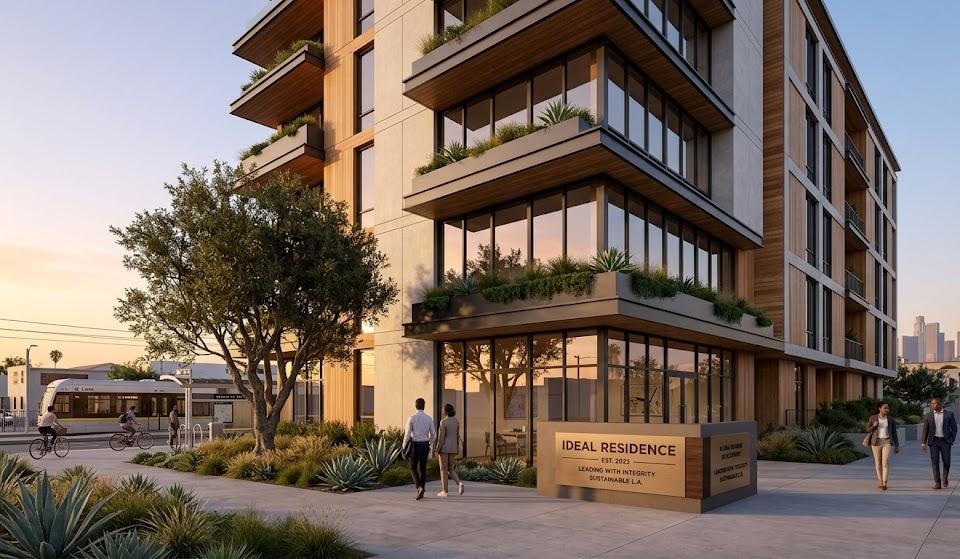
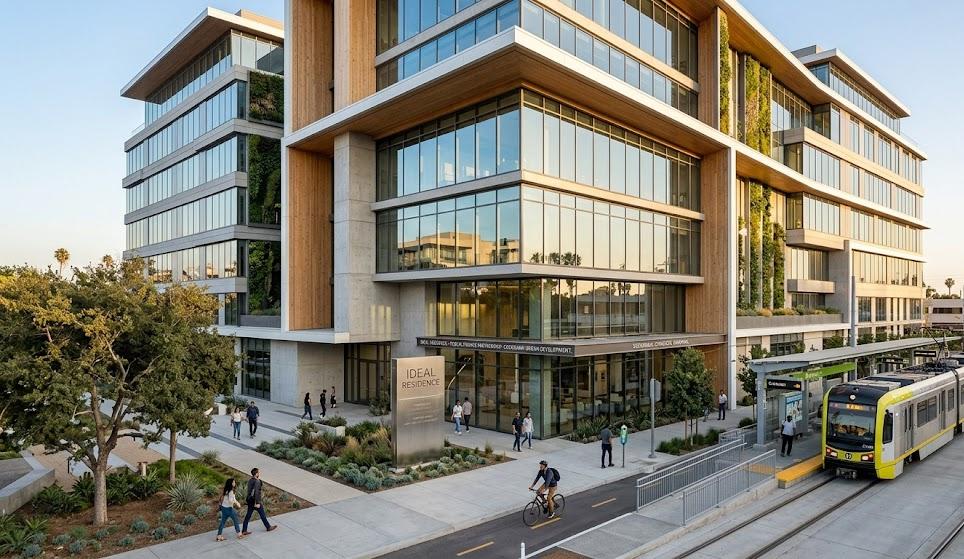
Our upcoming seven-story, 80-unit mixed-use development in the historic Crenshaw Corridor serves as a live blueprint for this institutional model. Situated steps from the K Line infrastructure, this asset transforms urban connectivity into a core driver of Net Operating Income (NOI).

                   [K Line Transit Infrastructure]
                                 │
                     (High-Density Footfall)
                                 │
                                 ▼
       [7-Story, 80-Unit Sustainable Mixed-Use Asset]
                                 │
            ┌────────────────────┴────────────────────┐
            ▼                                         ▼
   [Stabilized Tenant Base]                 [Commercial Retail Anchor]
            │                                         │
            └────────────────────┬────────────────────┘
                                 ▼
                     [Maximized Portfolio NOI]

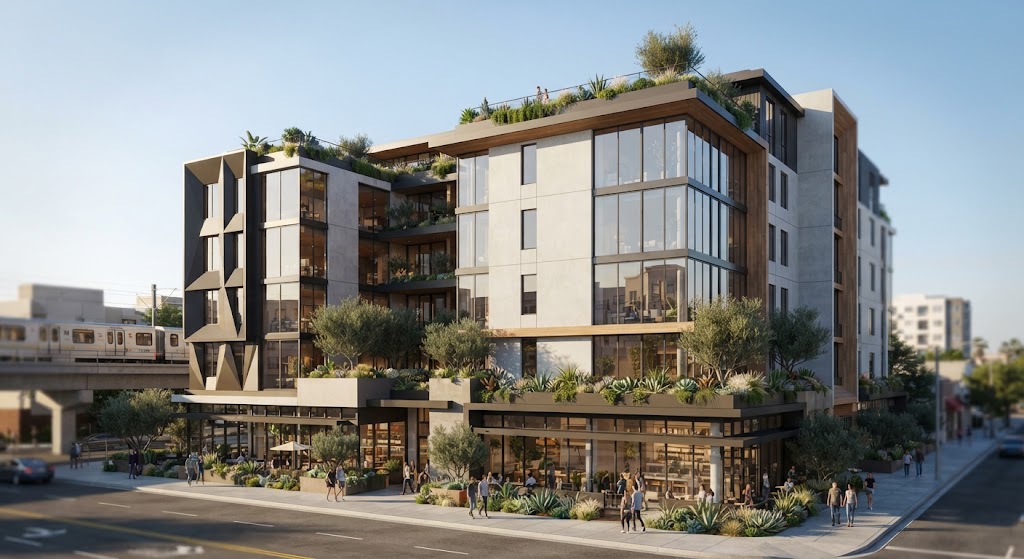
By positioning this project in South L.A., Ideal Residence capitalizes on a structurally underserved submarket characterized by high demand for premium, sustainable housing. The commercial ground floor is engineered to host high-credit, community-serving retail anchors. This further diversifies the asset’s revenue streams and insulates investors against macroeconomic cyclicality.

Future-Proofing Asset Valuation via Eco-Resilient Design

Modern institutional risk is deeply intertwined with escalating Operating Expenses (OpEx), driven primarily by climate volatility and surging utility costs. Ideal Residence mitigates these vulnerabilities by exceeding standard CalGreen Building Standards. We integrate advanced, eco-resilient systems directly into our structural designs.

  • Smart-Grid Integration: On-site solar photovoltaic arrays paired with localized battery storage systems significantly reduce common-area electrical overhead.

  • Passive Thermal Efficiency: High-performance glazing and insulated mass timber elements lower HVAC loads, reducing energy consumption.

  • Water-Scarcity Mitigation: Advanced greywater recycling and native, drought-tolerant California landscaping protect the asset from escalating municipal utility rates.

These sustainable interventions do more than lower our carbon footprint. They directly compress OpEx, driving superior yield and maximizing long-term asset valuation at disposition.

The New Standard for Institutional Joint Ventures

De-risking is ultimately the art of eliminating variables. By controlling every stage—from localized geographic selection along major transit corridors to forward-thinking sustainable construction—Ideal Residence provides capital partners with an insulated, highly predictable vehicle for wealth preservation and growth.

As the Los Angeles skyline evolves, our institutional framework ensures that every project transitions seamlessly from an ambitious vision to a highly secure, cash-flowing financial vault.

Ideal Residence develops high-quality, energy-efficient apartment buildings across Los Angeles, delivering smart, sustainable housing solutions for modern urban living.

GET IN TOUCH

County Assessor:
3962 West Martin Luther King Jr Blvd
Los Angeles CA 90008

Administrative Address:
3970 West Martin Luther king Jr.
Blvd, Los Angeles CA 90008

Newsletter

Get latest news & update

© 2025 Ideal Residence. All rights reserved.

© 2025 Ideal Residence. All rights reserved.

Designed by UpTech

about us

Ideal Residence develops high-quality, energy-efficient apartment buildings across Los Angeles, delivering smart, sustainable housing solutions for modern urban living.

get to know us

phone

310-701-7988

phone

310-701-7988

email

info@idealresidence.com

about us

Ideal Residence develops high-quality, energy-efficient apartment buildings across Los Angeles, delivering smart, sustainable housing solutions for modern urban living.

Get in touch

phone

310-701-7988

Ideal Residence, Los Angeles, California, USA

about us

Ideal Residence develops high-quality, energy-efficient apartment buildings across Los Angeles, delivering smart, sustainable housing solutions for modern urban living.

Newsletter

Get latest news & update