
How to Scale Real Estate Portfolios in High-Barrier Markets like California
In the landscape of 2026, the California multi-family real estate market presents a unique paradox. It remains one of the world’s most robust economies and a beacon of innovation. Yet, it simultaneously imposes some of the steepest barriers to entry. Strict regulatory oversight, complex zoning restrictions, high acquisition and construction costs, and localized initiatives like Measure ULA in Los Angeles have created a formidable terrain.
For institutional investors, private equity partners, and commercial lenders, the path to achieving critical mass is no longer found in traditional, sprawling acquisition strategies. Growth in high-barrier markets requires a strategic paradigm shift. Success is not defined by sheer asset volume. It is defined by intelligent, hyper-localized, and highly resilient portfolio development.
The New Architecture of Portfolio Growth
At Ideal Residence, our core thesis, driven by CEO Lara Okunubi, is that successful scaling in a market like California requires moving beyond the transactional model and embracing development-driven alpha. You cannot simply acquire existing assets in an efficient market and expect consistent, high-yield returns. The “barriers to entry” are precisely what create the potential for significant outperformance. We achieve this by turning these systemic constraints into competitive advantages, specifically focusing on the intersection of three key drivers: regulatory intelligence, sustainable resilience, and transit-oriented demand.
Scaling a modern portfolio must begin with understanding the fundamental forces shaping the urban landscape. To create long-term value, your investments must align with the vision of the municipalities. This approach requires a sophisticated, holistic, and long-term view.
Leveraging Regulatory Tools as Catalyst for Growth
The key to unlocking growth lies not in opposing regulations, but in masterfully leveraging the localized incentive programs designed to address specific municipal goals. For example, in Los Angeles, the Transit-Oriented Communities (TOC) Incentive Program is not a constraint, but an essential growth accelerator. This program provides crucial Floor Area Ratio (FAR) bonuses and other development incentives for projects that strategically integrate with the expanding transit grid.
By prioritizing transit corridors, you are not simply developing “units”; you are contributing to a long-term urban resilience plan. This proactive alignment creates streamlined approvals, greater design flexibility, and ultimately, significantly more efficient assets. The core competency is identifying and capitalizing on this synergy between municipal vision and sustainable urban growth.
Case Study: De-Risking through Precision Alignment
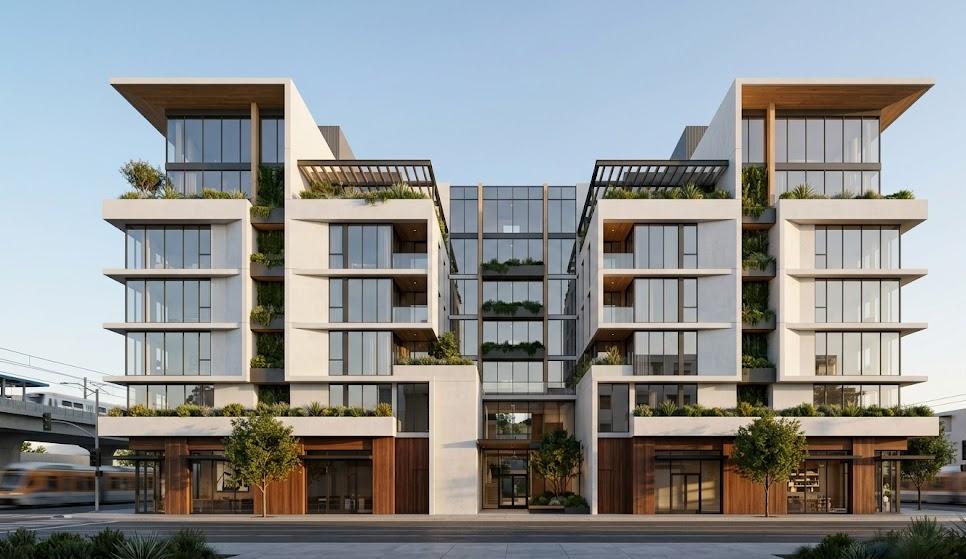
Our upcoming signature project is a prime example of this strategic methodology. We are developing a seven-story, 80-unit, mixed-use development in the heart of South L.A.’s Crenshaw Corridor.
This project doesn’t merely occupy space; it responds to its environment. It was specifically planned to leverage the immediate access and connectivity offered by the K Line infrastructure. By perfectly aligning the project with these existing and highly utilized transit nodes, we significantly de-risked the asset.
-
Optimized Utilization: The proximity to mass transit allows for enhanced residential density under the TOC program, thereby improving our overall Floor Area Ratio (FAR) and project economics.
-
Targeted Demand: This alignment tapped into a distinct and growing resident base seeking the convenience and connectivity of a genuinely car-free urban lifestyle.
-
Community Integration: The project will foster a vibrant community and includes a meaningful affordable housing component, meeting municipal requirements while driving social impact and strong long-term NOI.
Sustainability as a Primary Financial Driver
In 2026, sustainability is no longer a corporate social responsibility checkbox. It is an indispensable strategy for asset valuation and operational de-risking. The California regulatory climate, including the CalGreen Building Standards, is rapidly raising the bar. Portfolios that do not proactively integrate high-performance, eco-resilient design are inherently accumulating significant risk—both from regulatory non-compliance and future operational obsolescence.
At Ideal Residence, sustainability is integral to the entire lifecycle of our assets:
-
Optimized OpEx: From day one, we design for ultra-high-performance: utilizing mass timber structure, implementing smart-grid integration, and utilizing comprehensive eco-resilient systems. These strategies dramatically lower operational expenses (OpEx) for both energy and water, directly contributing to a superior Net Operating Income (NOI).
-
Long-Term Value Capture: Portfolios composed of forward-thinking, resilient assets are dramatically insulated from the impending regulatory risks, rising insurance costs, and shifting consumer demand. They will consistently capture a valuation premium compared to outdated, carbon-intensive competition. In the next real estate cycle, the most valuable assets will be the most sustainable.
Strategic Capital Stacking and Joint-Ventures
Achieving scale in a sophisticated, capital-intensive market like Los Angeles requires robust and creative capital stacking. Institutional capital, impact-focused funds, and community-centric lenders are all vital components.
The complexity of these strategic, regulatory-driven developments demands more than just capital; it requires sophisticated strategic partnerships. At Ideal Residence, our focus remains on cultivating deep, long-term joint-venture relationships with partners who understand that the real opportunity in California is not found in avoiding complexity, but in mastering it. We align capital with our proven methodology for de-risking and maximizing the impact of these vital urban infill projects.
Conclusion: Defining the Future Skyline
Scaling a real estate portfolio in a high-barrier market is a challenge that demands unparalleled foresight, execution capacity, and a willingness to operate at the intersection of capital and community. We are not just building structures; we are creating the resilient urban framework that will define the city’s future. The L.A. skyline of tomorrow is being shaped today by those with the vision to align intelligent growth with localized impact. For those ready to deploy capital into this dynamic and sustainable vision, the road to critical mass is a shared journey toward creating both financial outperformance and vital, lasting value.
