
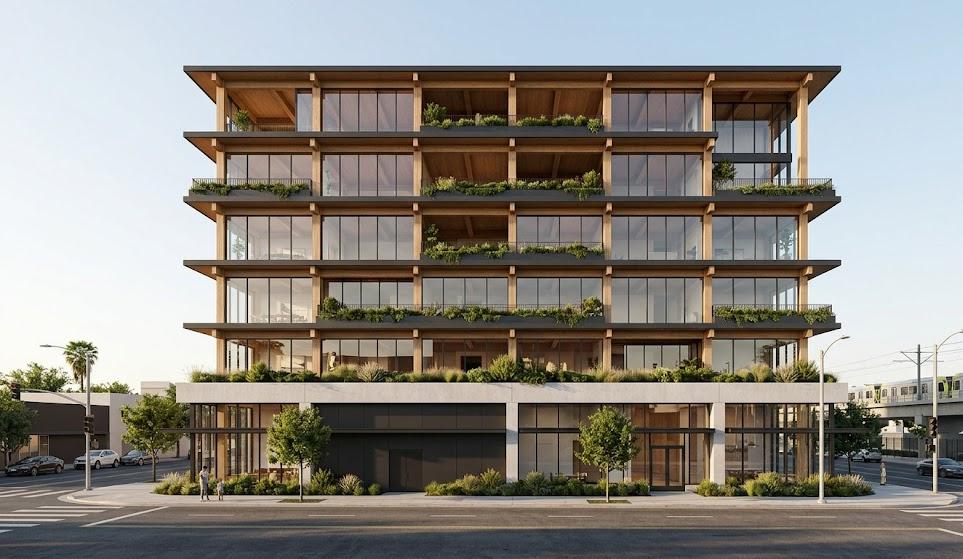
The Rise of Mass Timber: Building Eco-Friendly High-Rises in Southern California
As the Los Angeles real estate landscape navigates the complexities of 2026—characterized by volatile dynamic interest rates and an intensifying climate mandate—the traditional paradigms of multi-family construction are being fundamentally rewritten. The imperative for institutional investors and developers is no longer just optimization of Floor Area Ratio (FAR); it is the integration of radical sustainability with optimized construction timelines to de-risk assets. At Ideal Residence, led by CEO Lara Okunubi, we recognize that the future of the L.A. skyline belongs to Mass Timber.
For decades, concrete and steel have been the unquestioned default for vertical development in Southern California. However, these materials carry a massive carbon footprint, accounting for a significant portion of global emissions. In an era defined by stringent CalGreen Building Standards and the local implications of Measure ULA, continuing with “business as usual” represents a significant regulatory and reputational risk for asset managers.
A New Standard: The Economic Case for Cross-Laminated Timber (CLT)
Mass timber, specifically Cross-Laminated Timber (CLT) and Glue-Laminated Timber (Glulam), offers a sophisticated, high-performance alternative to traditional methodologies. This is not the lightweight wood-frame construction of the past; these are engineered wood products that rival steel in structural capability while being significantly lighter.
From an investment perspective, the advantages of Mass Timber are realized rapidly through the construction lifecycle. Mass Timber components are prefabricated off-site with millimeter precision. This “kit-of-parts” approach transforms the construction site into an assembly zone, significantly compressing project schedules. For an institutional developer, a faster build-out translates directly into lower capitalized interest, reduced general conditions, and accelerated stabilization, ultimately boosting Net Operating Income (NOI) upon asset maturity.
The Ideal Residence Model: Mass Timber in the Crenshaw Corridor
At Ideal Residence, we don’t just analyze trends; we capitalize on them to deliver sustainable, transit-oriented communities. Our flagship 7-story development in the Crenshaw Corridor serves as a primary case study for Mass Timber’s viability in South L.A. By utilizing Mass Timber for the residential floors above a concrete podium, we are pioneering the type of eco-resilient design required in modern urban core markets.
Strategically located adjacent to the K Line infrastructure, this 80-unit mixed-use project leverages the City of Los Angeles Transit-Oriented Communities (TOC) Incentive Program. Mass Timber’s lighter structural weight is key to unlocking the density bonuses and reduced parking requirements offered by the TOC program. The aesthetic appeal of exposed timber ceilings in the units is also commanding a significant rental premium, directly contributing to superior asset valuation compared to adjacent concrete-and-drywall assets.
Navigating the 2026 Regulatory Landscape
The Southern California regulatory environment is increasingly hostile to carbon-intensive construction. Current municipal trends suggest that future density bonuses and FAR increases will be inextricably linked to a project’s lifecycle carbon impact. De-risking a real estate portfolio against 2030 and 2050 climate targets requires a decisive shift toward materials that sequester carbon.
Mass Timber inherently aligns with these performance-based codes. The renewable nature of the material, combined with its high insulation properties, drastically reduces operational OpEx through increased energy efficiency. Furthermore, when combined with smart-grid integration and other high-performance building systems, Mass Timber assets are uniquely positioned to achieve net-zero operational profiles, shielding investors from future carbon taxes and utility price volatility.
Conclusion: The Strategic Advantage
The transition to Mass Timber in Southern California is not merely an aesthetic or ethical choice; it is a critical strategy for future-proofing institutional real estate portfolios. As Lara Okunubi and the Ideal Residence team continue to demonstrate in the Crenshaw Corridor, the integration of Mass Timber with transit-oriented development metrics offers the most compelling path to sustainable growth, superior risk-adjusted returns, and the creation of resilient, high-demand assets in the Los Angeles market.
