
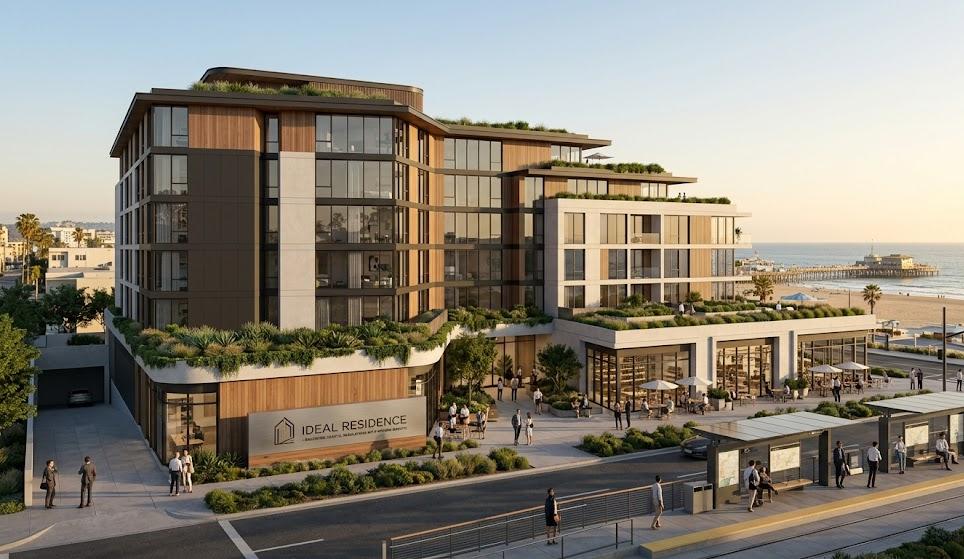
Santa Monica Real Estate: Balancing Coastal Regulations with Modern Growth
The Los Angeles multi-family investment landscape in 2026 demands a sophisticated understanding of micro-market dynamics. Nowhere is this more evident than in Santa Monica.
For institutional investors, Santa Monica represents a blue-chip asset class characterized by high barriers to entry and sustained tenant demand. However, the regulatory environment—a complex interplay of local zoning and the California Coastal Commission—requires a specialized development approach.
At Ideal Residence, led by CEO Lara Okunubi, we view these regulations not as obstacles, but as essential parameters for creating long-term, eco-resilient value. Our strategy centers on balancing necessary modern growth with the unique coastal fabric that defines the region’s appeal.
Navigating the Coastal Zoning Matrix
Developing in Santa Monica requires more than standard Floor Area Ratio (FAR) calculations. The city’s rigorous discretionary review process significantly impacts development timelines and required capitalization.
Success hinges on early and transparent engagement with municipal officials and community stakeholders. Successful projects are those that align private investment goals with the city’s long-term vision for sustainability and housing equity.
We prioritize a de-risking strategy that integrates regulatory compliance directly into the initial architectural concept, ensuring a streamlined path to entitlement.
The Sustainable, Transit-Oriented Imperative
The future of Santa Monica real estate is inherently linked to sustainability and transit accessibility. The city’s strict green building standards necessitate a forward-thinking approach to design.
Ideal Residence focuses on transit-oriented development (TOD). We leverage existing infrastructure and upcoming K Line connections to reduce car dependency and justify higher-density projects.
Our developments incorporate eco-resilient features from the ground up:
-
Smart-grid integration for optimized energy consumption.
-
Mass timber construction accents to reduce embedded carbon.
-
Native, drought-tolerant landscaping to manage water resources effectively.
This commitment to sustainable design does more than fulfill mandates; it fundamentally drives asset valuation by reducing long-term Operating Expenses (OpEx) and appealing to the modern, eco-conscious tenant base.
A Strategic Approach to Asset Valuation
In a market like Santa Monica, asset valuation is intrinsically tied to compliance and forward-thinking design. Ignoring the regulatory or environmental shift is no longer an option for institutional capital.
By anticipating these shifts, developers can secure Floor Area Ratio (FAR) bonuses and other incentives that significantly enhance project feasibility. This proactive approach directly impacts Net Operating Income (NOI) through both premium rents and operational efficiencies.
For private equity partners and commercial lenders, this strategy provides a robust framework for capital deployment in a high-demand coastal market.
Conclusion: Engineering the Coastal Skyline
The Santa Monica real estate market offers unparalleled opportunities, provided developers possess the expertise to navigate its complexities. The challenge is clear: create meaningful, dense housing solutions that respect the coastal environment.
At Ideal Residence, we are engineering the future of the Southern California skyline. By prioritizing sustainable, transit-oriented, and regulatorily sound development, we deliver assets that generate sustained value for our investors and the community alike. We invite forward-thinking joint-venture partners to join us in shaping this dynamic coastal market
