
The Future of Mid-City: Bridging the Gap Between East and West L.A.
The geographic center of Los Angeles is undergoing a profound transformation. For decades, the historic neighborhoods bridging the dense core of Downtown L.A. with the affluent Westside have been characterized by underutilized infrastructure and a lack of investment. Today, however, the “Crenshaw Corridor” and its surrounding communities are rapidly emerging as the epicenter of a new model for sustainable, equitable urban growth.
At Ideal Residence, we view this evolution not merely as a real estate trend, but as a critical investment opportunity. By leveraging progressive municipal policies and innovative design, we are de-risking development in the area while delivering essential housing stock.
The Policy Drivers: Unlocking Value in the Urban Core
The revitalization of Mid-City is heavily supported by forward-thinking regulatory frameworks. The City of Los Angeles’s Transit-Oriented Communities (TOC) Incentive Program has been a game-changer. By tying density bonuses and parking reductions to proximity to high-quality transit—specifically the newly operational K Line—the TOC program has unlocked significant Net Operating Income (NOI) potential for developers committed to sustainable density.
Furthermore, the implementation of the Crenshaw Corridor Specific Plan ensures that growth is managed and complementary to the existing community fabric. This alignment of public infrastructure investment and private development creates a powerful multiplier effect on asset valuation.
De-Risking the Asset Class: Design and Efficiency
While the regulatory environment is favorable, long-term asset performance depends on operational excellence. At Ideal Residence, we focus on eco-resilient design and smart-grid integration not just for sustainability, but for long-term OpEx control.
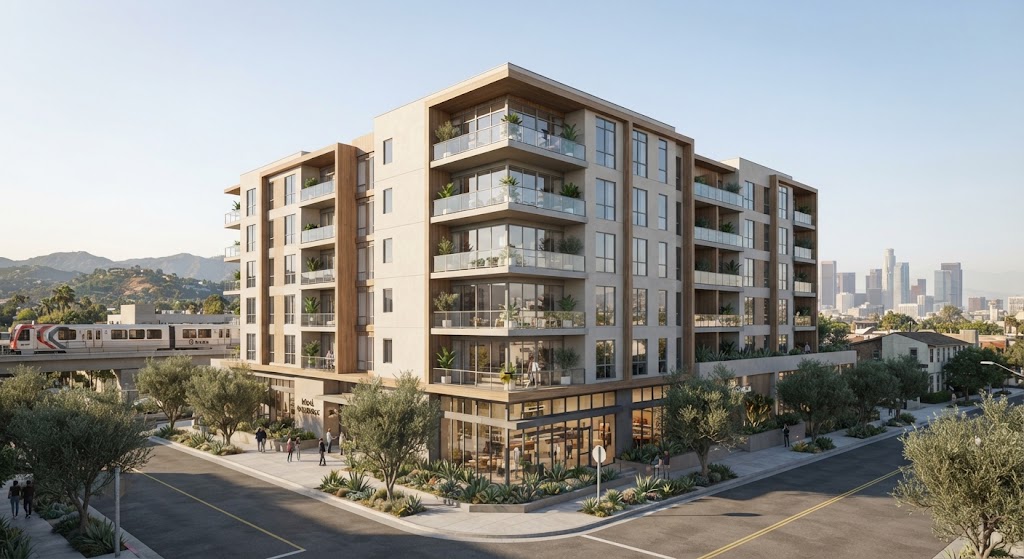
Our upcoming signature project in the Crenshaw Corridor serves as a prime example. This 7-story, 80-unit mixed-use development is designed to meet CalGreen Building Standards, significantly reducing future operational costs while enhancing resident quality of life. By incorporating ground-floor retail that serves both the building’s residents and the local community, we create a diversified income stream that stabilizes the asset’s financial performance against market fluctuations.
Bridging the Gap: The Broader Economic Impact
The strategic importance of Mid-City extends beyond individual property values. It is about connectivity. The successful integration of these neighborhoods is vital for a cohesive Los Angeles. It creates a continuous economic corridor that links the employment centers of the Westside with the cultural and civic hub of Downtown.
Projects like ours act as catalysts, encouraging further investment, creating jobs during construction and operation, and increasing the overall municipal tax base. This is responsible, high-conviction investing that aligns with the broader goals of the city.
Conclusion: A High-Conviction Outlook
The future of Mid-City is not a speculative forecast; it is a reality currently under construction. As we look toward the 2028 Olympics and beyond, the demand for well-located, transit-adjacent housing in Los Angeles will only intensify.
Ideal Residence is at the forefront of this movement. We invite institutional investors, capital partners, and municipal leaders to engage with us as we shape the future of the Los Angeles skyline, one sustainable development at a time.
